Last updated November 18, 2026
Free written scope consultation - allowances, timeline, and change-order rules on paper before a single trade is scheduled
The Complete Bathroom Remodeling Guide for Irving Homeowners
The number one reason Irving bathroom remodels go over budget isn’t the tile or the vanity. It’s what’s behind the drywall in a house built before 1990, and you won’t know it’s there until demo day. We’ve opened up bathrooms in the older neighborhoods around Irving and found cast iron drain lines rusted down to a trickle, galvanized supply pipes one cold snap from failing, and subfloor that had been quietly softening for years under a layer of vinyl. None of that shows up on a design show. All of it shows up on the invoice. This guide walks through how to budget honestly by build decade, what Irving permits require, and how the trades should be sequenced so the job doesn’t stall.
Quick Answer
A full bathroom remodel in Irving runs roughly $18,000 to $38,000 for a standard hall bath, and a surface refresh (paint, fixtures, refinished tub) runs $4,000 to $9,000. The gap comes from what’s behind the walls: homes built between 1970 and 1995 in Irving often need cast iron drain replacement, galvanized supply line upgrades, and subfloor repair, which adds $2,500 to $8,000 to the job. Budget for hidden conditions before you pick tile.
Styles & brands we work with
- Kitchen remodeling
- Bathroom remodeling
- Home additions & ADU
- Roofing
- Windows & doors
- Driveway & pavers
- Fence
Table of Contents
- How Your Home’s Build Decade Changes the Budget
- Full Gut Renovation vs. Surface Refresh: The Honest Numbers
- Irving Permit Requirements for Bathroom Remodels
- Ventilation Under Texas Code: Why the Exhaust Fan Is Rarely Optional
- How to Sequence the Trades (and What Happens When It Scrambles)
- How to Scope Your Project Before You Call Anyone
- Common Mistakes to Avoid
How Your Home’s Build Decade Changes the Budget
Irving is a patchwork of housing stock. You’ll find 1950s ranch homes in the older core near downtown, dense 1970s and 1980s subdivisions in the neighborhoods around Belt Line and Northgate, and newer construction up toward Valley Ranch and Las Colinas. A bathroom in each of those homes is a different project with a different price tag. The tile and vanity might cost the same. What’s behind them won’t.
Pre-1960 homes
These often have original cast iron drain stacks and galvanized supply lines, sometimes with lead-based paint on the walls. Opening a wall means handling all three. The cast iron drain lines in a 1950s ranch may still be working, but they’re brittle and often already cracked at the joints. Galvanized supply pipes build up mineral scale on the inside and lose pressure over decades. If you’re keeping the layout and the pipes test fine, you may get away with a partial update. If you’re moving the toilet or shower, plan on replacing the supply and drain lines in the wall.
1970-1995 homes
This is the sweet spot for hidden surprises in Irving. Cast iron drains from that era are at the end of their service life, and the original subfloor is often 5/8-inch particle board under a vinyl or tile layer. When water gets in – and it always does at the tub or shower – the particle board swells and turns to mush. You won’t know until you pull the floor up. Budget an extra $2,500 to $8,000 for subfloor repair and plumbing upgrades on a home from this era.
Post-1995 homes
PVC and PEX have largely replaced the old stuff, so hidden plumbing failures are less common. The money here usually goes to cosmetic upgrades, layout changes, and code updates for ventilation. A bathroom remodel in a 2005 home in Las Colinas is a different conversation than one in a 1980 home near Northgate.
Full Gut Renovation vs. Surface Refresh: The Honest Numbers
There are two ends of the bathroom remodel spectrum in Irving, and the cost gap is bigger than most homeowners expect. Here’s what the current DFW labor and material market looks like for each, drawn from jobs across Irving and nearby.
Surface refresh: $4,000 to $9,000
- Refinish or reglaze the existing tub, $450 to $800
- Replace the vanity and faucet, $600 to $1,400 installed
- Replace the toilet, $250 to $550 installed
- New light fixtures and mirror, $300 to $700
- Fresh paint and a new floor over the existing (if the subfloor is sound), $900 to $2,200
- New exhaust fan if the existing one is undersized or vented into the attic, $450 to $900
A refresh works when the plumbing is healthy, the subfloor is solid, and the layout stays put. It doesn’t work when the tub drains slow, the floor feels soft near the toilet, or the walls have that faint musty smell that never quite goes away.
Full gut renovation: $18,000 to $38,000
- Demo and disposal, $1,200 to $2,400
- Plumbing rough-in and upgrades, $2,500 to $6,500 (higher if cast iron drain lines come out)
- Electrical rough-in and GFCI protection, $1,200 to $2,800
- Subfloor repair or replacement, $800 to $3,500
- Waterproofing and cement board, $900 to $1,800
- Tile and stone installation, $3,500 to $9,000
- Vanity, tub or shower, and fixtures, $3,000 to $8,500
- Permit fees and inspections, $250 to $550 typically
Those numbers move based on finish level and layout. A custom tile shower with a curbless entry and a linear drain adds $3,000 to $6,000 over a standard alcove tub and tile surround. A vanity with a Cambria top runs more than a stock cabinet with laminate.
Irving Permit Requirements for Bathroom Remodels
Irving requires a building permit for any bathroom remodel that moves plumbing, adds or relocates electrical circuits, or makes structural changes. A cosmetic-only renovation – paint, fixtures swapped on existing rough-in, a new vanity in the same spot – usually doesn’t require a permit, though a licensed plumber or electrician may still need to pull their own trade permit for certain work.
What triggers a permit
- Moving the toilet, tub, shower, or sink supply or drain lines
- Adding a new circuit for a heated floor, towel warmer, or larger exhaust fan
- Converting a tub to a walk-in shower when the drain relocation is required
- Removing or altering a wall
- Adding or enlarging a window in the bathroom (which also triggers egress and energy code review)
What the inspection actually catches
An inspector looks at things you can’t see once the tile goes down: proper slope on the shower pan, waterproofing membrane coverage, drain connections and venting, GFCI protection at every bathroom receptacle, and the exhaust fan’s vent path. The permit inspector works for you, not for the contractor. That’s why we pull permits on every eligible job, and why every scope, allowance, and price change arrives in writing before work happens.
Why some contractors skip the permit
Almost every homeowner we’ve talked to after a bad remodel has heard some version of “you don’t need a permit for this.” Sometimes that’s a shortcut to avoid scrutiny. Sometimes it’s an honest mistake. Either way, an unpermitted bathroom remodel becomes your problem when you go to sell, and Irving’s resale disclosure requires you to report it. Get the permit. Get the inspection signed.
Ventilation Under Texas Code: Why the Exhaust Fan Is Rarely Optional
Every bathroom in Irving needs mechanical exhaust, and it needs to vent to the outside, not into the attic. That’s a building code requirement under the International Residential Code that Texas has adopted, and it matters more here than in drier climates because DFW summers run hot and humid. A bathroom that traps moisture grows mildew on the ceiling and inside walls within a season.
What the code actually requires
- A fan rated at 50 CFM minimum for intermittent operation, or 20 CFM continuous
- Vent duct that terminates outdoors, with smooth metal ductwork rather than flexible plastic
- Duct runs that are short and mostly straight, ideally under 25 feet with no more than one elbow
- Insulated duct in unconditioned attic space to prevent condensation forming inside the pipe
Why the fan upgrade is almost never optional
Fans from the 1970s and 1980s in Irving homes are typically undersized (30 to 40 CFM), noisy, and vented into the attic. That’s a problem twice over: the moisture goes into the attic, and the fan can’t clear the bathroom fast enough. When you remodel, you’re already in the ceiling and the attic access is already open. Replacing the fan and running proper duct to a roof or wall vent costs $450 to $900 and saves you thousands in attic mold remediation later. Every full gut renovation we do includes a fan and vent upgrade unless the existing install already meets code.
How to Sequence the Trades (and What Happens When It Scrambles)
The order matters more than the speed. A bathroom that gets rushed out of sequence ends up with tile coming loose, leaks that don’t show until the second season, or an inspection failure that stalls the job for weeks. Here’s the sequence we follow on every Irving bathroom remodel:
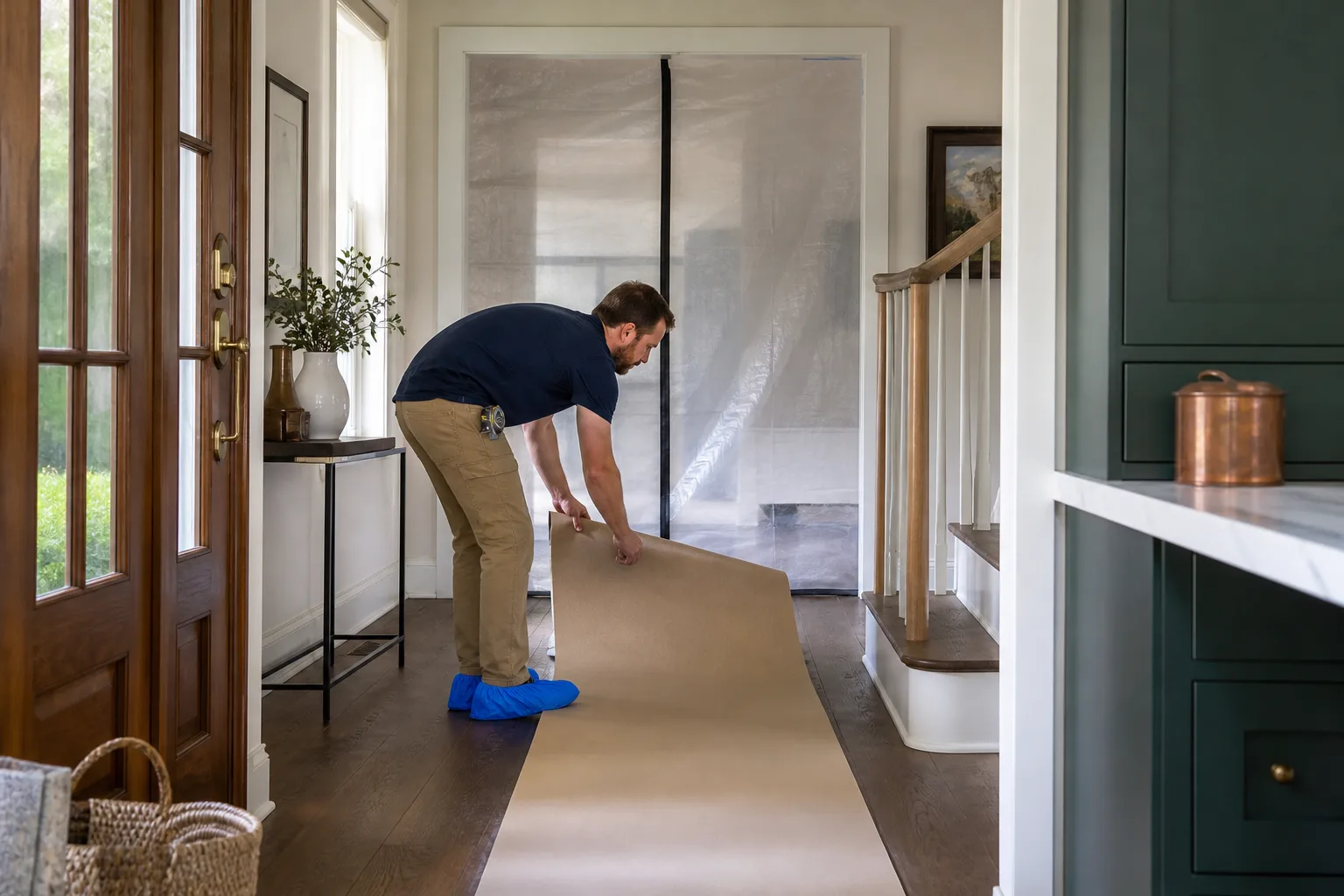
- Demo and site protection. Pull everything down to the studs, protect the floor and adjacent rooms, and inspect what’s underneath – the subfloor, framing, plumbing, and electrical.
- Plumbing rough-in. Replace or reroute supply and drain lines, install the new tub or shower pan, and pressure-test before anything gets covered up.
- Electrical rough-in. Run new circuits for GFCI receptacles, lighting, the exhaust fan, and any heated floor. Get the inspection signed.
- Framing and subfloor repair. Address any rot or soft spots. If the subfloor needs replacing, this is the moment. Wait until after plumbing because you’ll want to cut around the new drain riser.
- Insulation and waterproofing. Insulate exterior walls and install cement board with a liquid or sheet waterproofing membrane on every wet wall and the entire shower pan.
- Tile installation. With the membrane cured, set tile on the walls and floor, grout, and seal. This is when the visual part of the job becomes obvious, and when shortcuts (no membrane, thin thinset) become permanent problems.
- Fixtures and finish. Set the vanity, toilet, faucets, shower trim, mirrors, and lights. Final inspection for plumbing, electrical, and building.
What happens when the order gets scrambled
Move tile before plumbing and you’ll be cutting out a beautiful shower pan to fix a rough-in leak. Move the vanity before the floor is finished and you’ll be pulling it back out to lay tile underneath. Set fixtures before the inspection and you’ll be pulling them off to show the inspector the rough-in. None of these are rare mistakes. They’re the reasons a two-week job stretches past two months, and they’re the reasons every scope, allowance, and price change has to live in writing before work proceeds.
How to Scope Your Project Before You Call Anyone
You’ll get a better estimate faster if you’ve done this homework first. Here’s how to scope a bathroom remodel in Irving so the contractor can quote accurately.
- Measure the room. Length, width, ceiling height, and the location of the toilet, shower, tub, vanity, and existing windows. Photograph everything before demo starts.
- Note the home’s build year. Pull the appraisal district record – Dallas County keeps it online for Irving properties. The build decade tells you what to expect behind the walls.
- Test the fixtures. Run the tub and shower drains, flush the toilet, and check for slow drains, low pressure, or water stains at the base of the toilet. These are signs of plumbing issues.
- Look for moisture clues. Press on the floor near the tub and toilet. Soft spots, cracked grout lines that keep returning, or musty smells point to subfloor or shower pan problems.
- Decide on layout changes. Are you keeping the tub, converting to a walk-in shower, adding a second sink, or enlarging the room? Layout changes are the biggest driver of cost.
- Set a finish level. Stock vanity and porcelain tile is one budget; custom cabinetry and natural stone is another. Be honest with yourself about what you’ll want in ten years.
- Build a 15% contingency. Not because a good contractor will surprise you, but because a 1980s bathroom in Irving occasionally surprises even the contractor.
If your remodel is part of a larger project, our guides on the Barrett & Sons Construction Irving home page, Home Additions & ADU in Irving, and Fence Installation in Irving help you understand how the trades interact when you’re opening up more than one room.
Common Mistakes to Avoid
- Picking tile before the walls are open. The tile decision is easy. The wall-and-plumbing decision is the one that moves the budget. Scope both before you buy anything.
- Skipping the permit to save time. A stalled job waiting on a permit costs more than the permit. And an unpermitted Irving remodel becomes a disclosure nightmare at resale.
- Venting the exhaust fan into the attic. It’s the single most common shortcut we see in older Irving homes. It puts moisture where it does the most damage.
- Trusting a verbal allowance. An allowance that isn’t on paper is a surprise waiting for a date. Get every allowance, every scope line, and every price change in writing before the work happens.
- Tile over thinset without a waterproofing membrane. It looks fine in the showroom photos and fails in season two. Waterproofing is not optional in a wet area.
- Rushing the inspection before fixtures are set. Rough-in inspections are for rough-in. Set fixtures only after the rough-in passes, or you’ll be paying for a re-inspection and a reinstall.
- Assuming the cheapest bid is the lowest cost. The bid with a low number and no plumbing line item is the one that comes back to you with a change order after demo.
See the difference
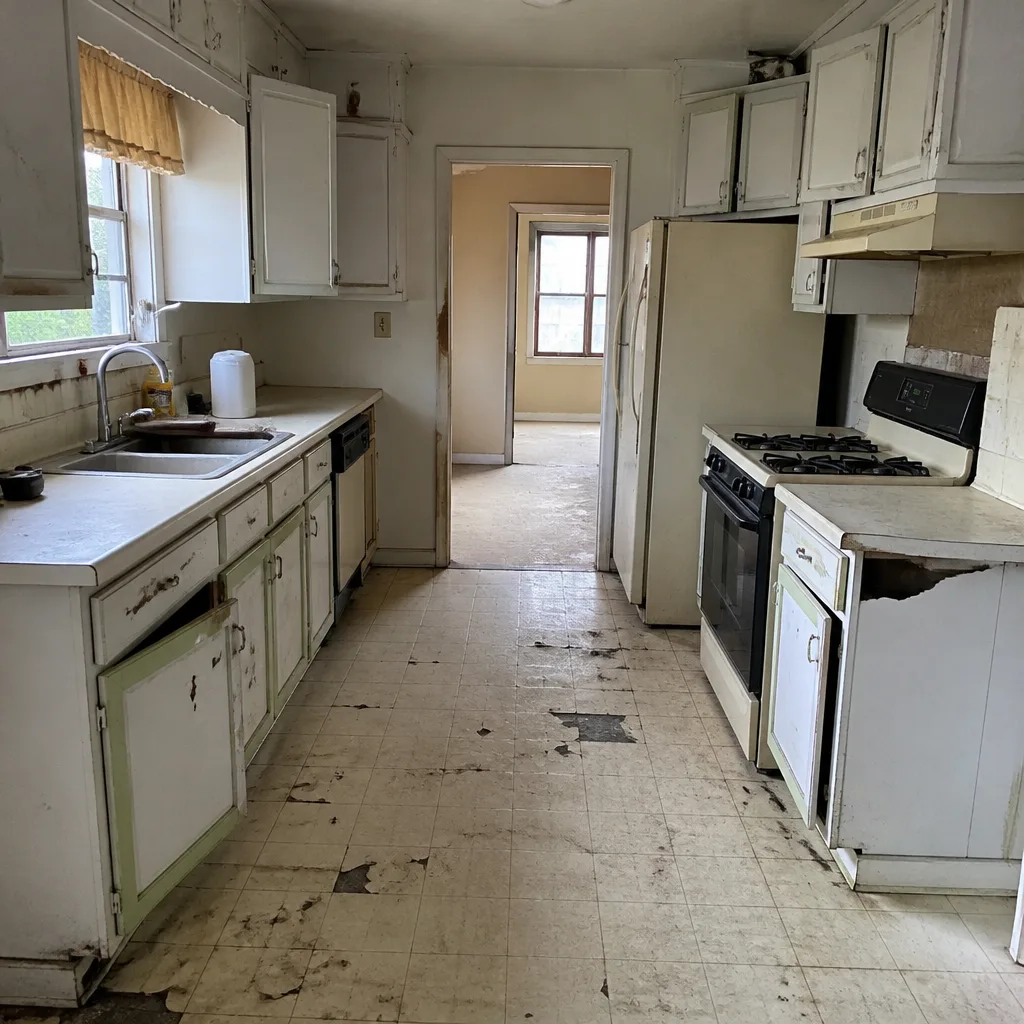 Before
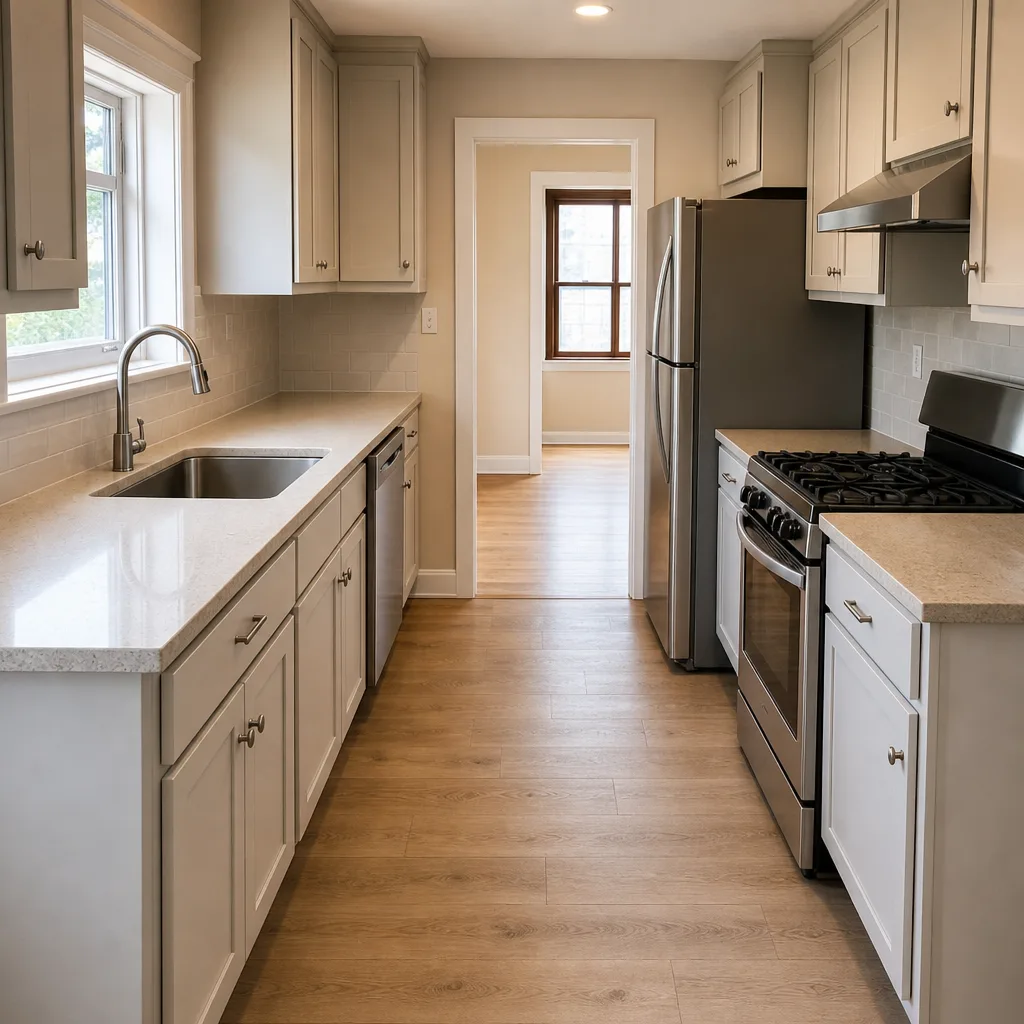 After
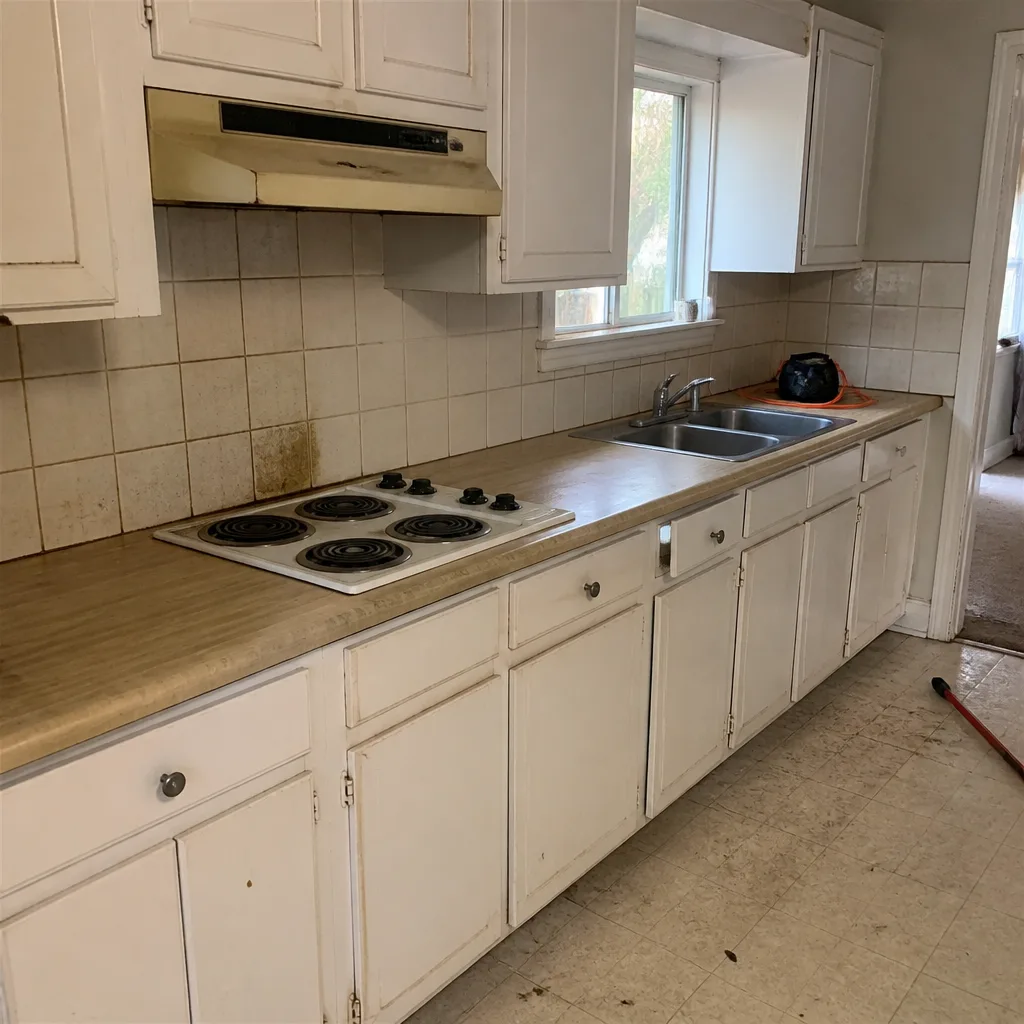 Before
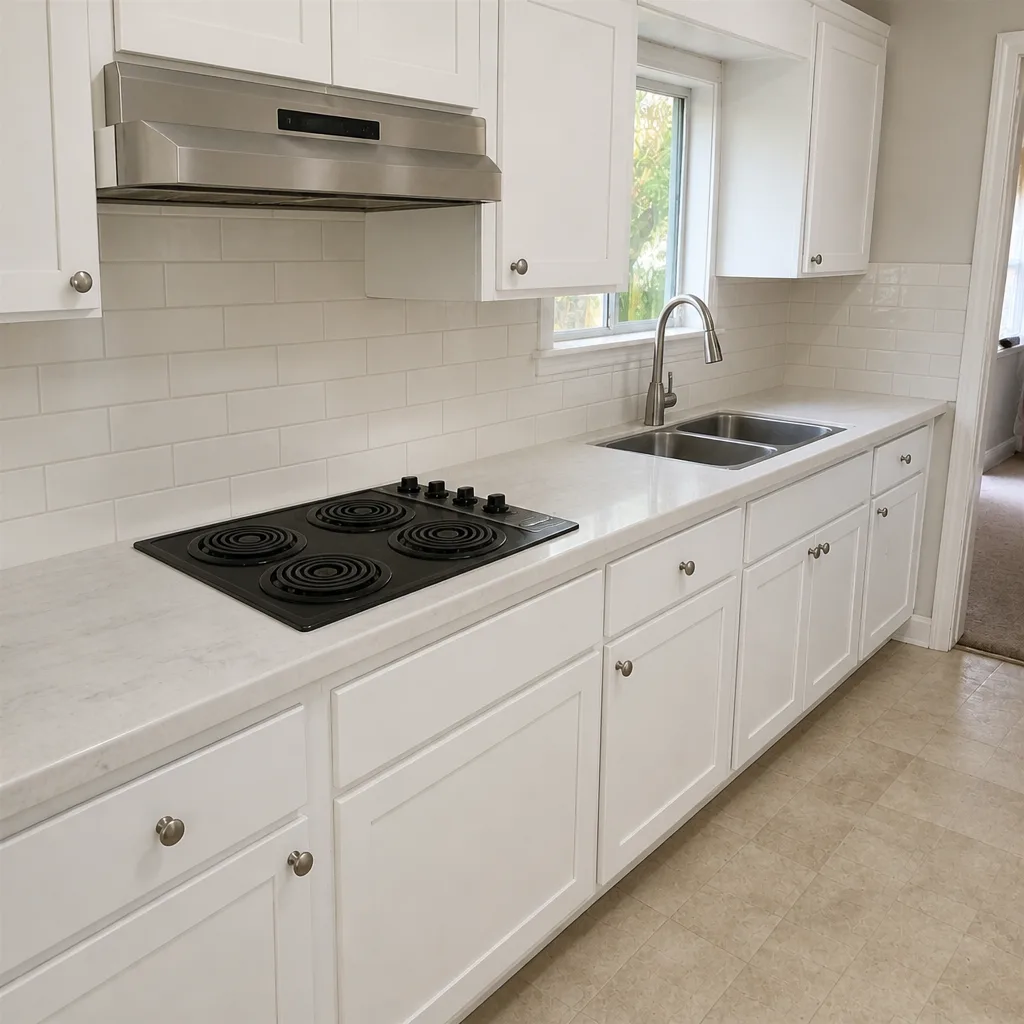 After
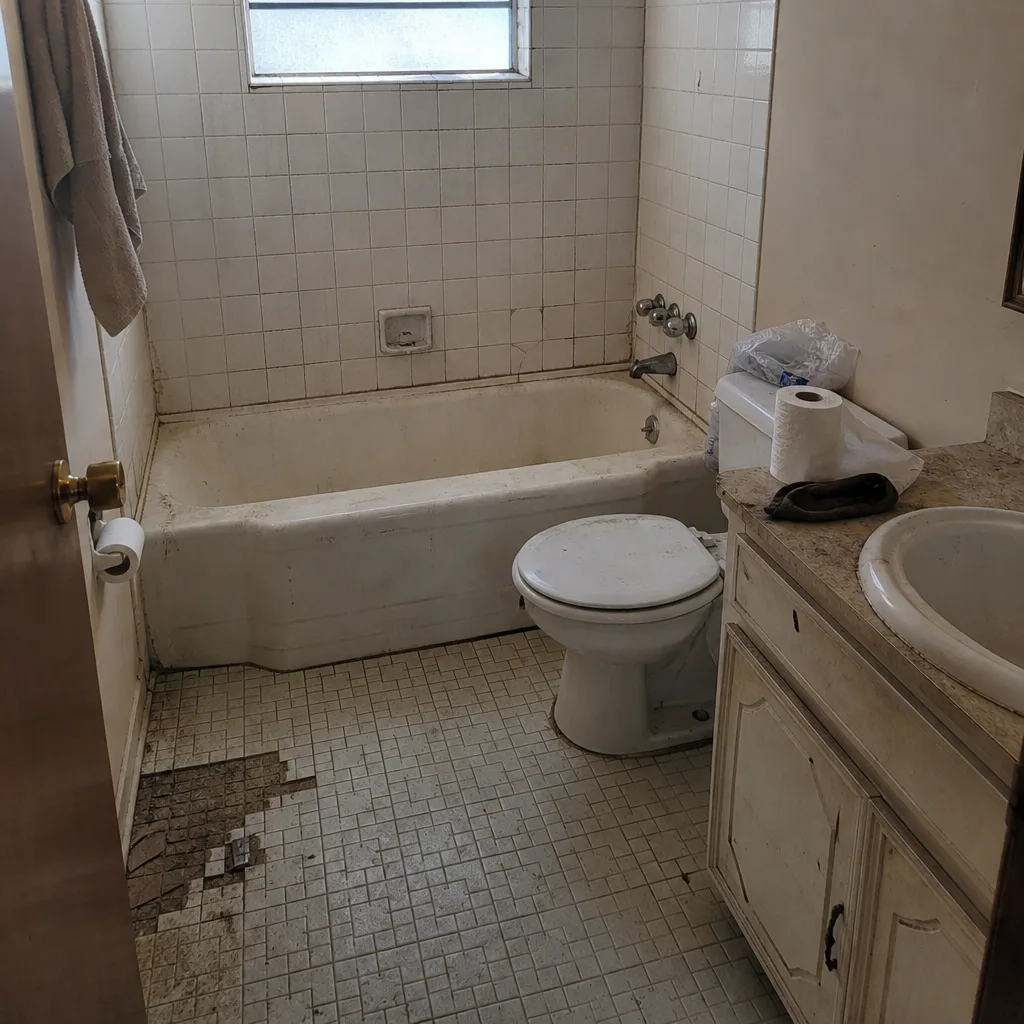 Before
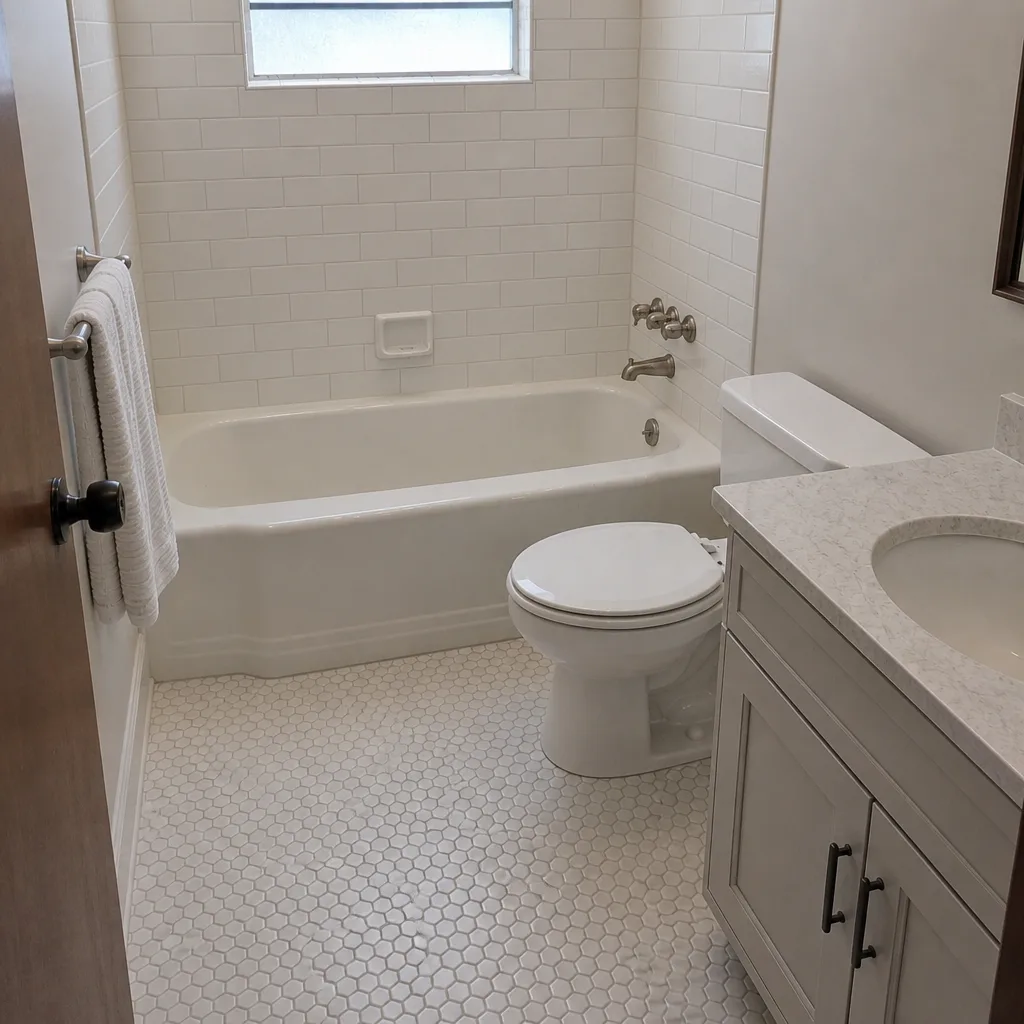 After
When to Call a Professional
Some bathroom work is safe to handle yourself: paint, swapping a faucet with the water off, hanging a mirror or towel bars. The moment you’re moving plumbing, opening a wall, or dealing with a wall of cast iron pipe you can’t quite see behind, it’s a licensed trade job. Concrete examples we see in Irving: a shower pan that smells musty a season after a DIY retile, a toilet drain that runs slow because the original cast iron offshoot cracked and nobody realized, and an exhaust fan the original homeowner vented directly into the attic. Each of those becomes a much bigger project once moisture has settled in. Call a licensed contractor, get permits pulled, and get inspections signed. Barrett & Sons Construction Irving offers free estimates in Irving – call (833) 991-4970 and we’ll walk through the scope in writing.
Frequently Asked Questions
A full bathroom remodel in Irving runs $18,000 to $38,000 depending on the finish level and whether you’re moving plumbing. A surface refresh runs $4,000 to $9,000. Homes built between 1970 and 1995 often need $2,500 to $8,000 in hidden plumbing or subfloor repairs. Call (833) 991-4970 for an exact quote – estimates are free.
Not without a written change order in your hands first. Every scope, allowance, and price change should be documented in writing before work proceeds. If a contractor can’t show you a signed change order, don’t keep going. Call (833) 991-4970 for a free second opinion on any written estimate you already have.
Yes, if you’re moving plumbing, adding electrical circuits, or making structural changes. A cosmetic refresh that keeps the existing rough-in usually doesn’t require a permit, though certain trade work still does. Look up your home’s build year and call (833) 991-4970 to walk through what your specific project needs.
A surface refresh runs 1 to 2 weeks. A full gut renovation in a 1970-1995 Irving home typically takes 4 to 7 weeks once you account for demolition, rough-in inspections, waterproofing cure, tile, and final inspection. Add 1 to 2 weeks if any hidden plumbing or subfloor issues turn up after demo. Call (833) 991-4970 to get a timeline for your specific scope.
Because it was faster and cheaper to install that way in 1978. It’s also the single biggest ventilation mistake we find in older Irving homes. Venting the fan into the attic pushes moisture into unconditioned space, where it condenses and starts mold. Texas code requires the duct to terminate outdoors. Call (833) 991-4970 to schedule a free estimate on a fan and vent correction.
Keep a tub if you have children at home or plan to sell to buyers with kids. Convert to a walk-in shower for aging in place, resale in 55+ communities, or when the tub is never used. The cost difference is $3,000 to $6,000 higher for a walk-in with a new drain location and tile pan. Call (833) 991-4970 to talk through the layout and the cost before you commit.
The Bottom Line
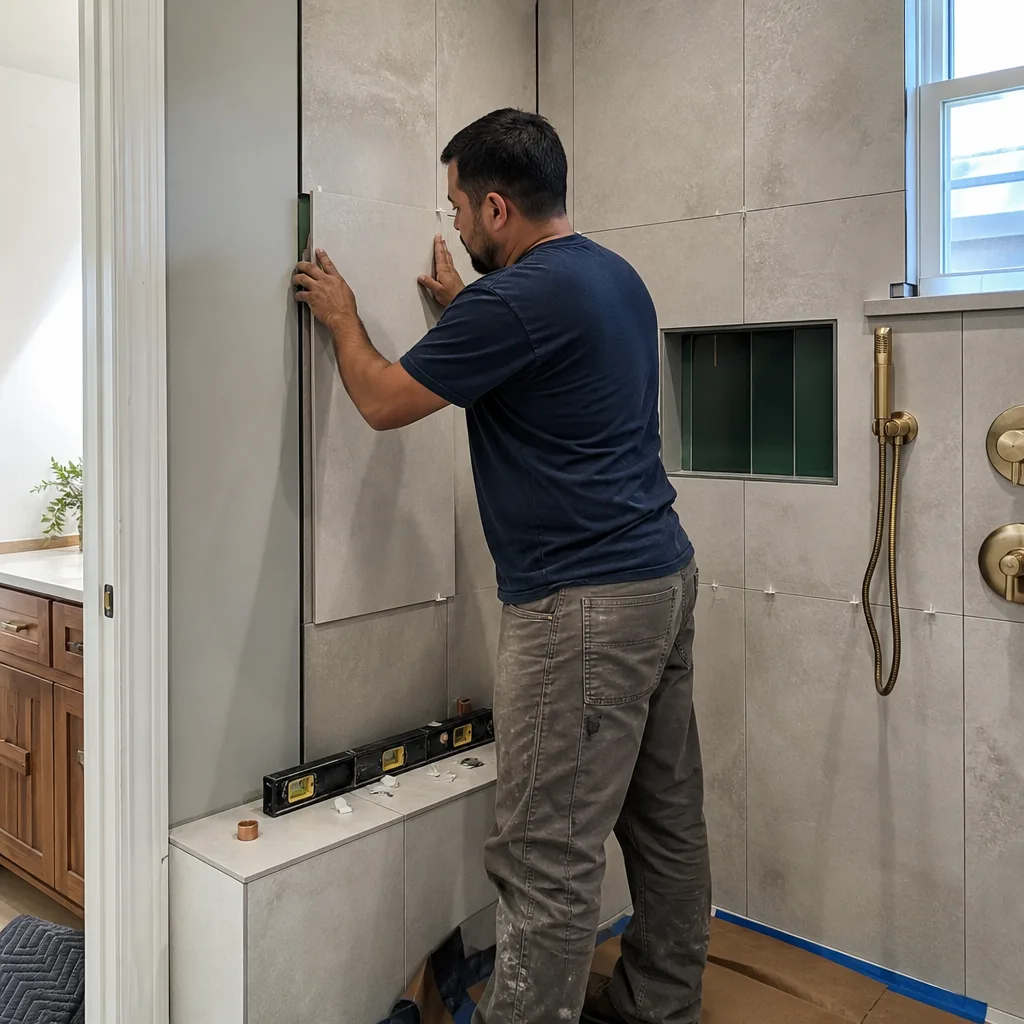
Your bathroom remodel in Irving is a scope decision long before it’s a tile decision. Know your home’s build decade. Budget a 15% contingency for the hidden conditions behind the walls. Pull the permit every time – the inspector works for you. Replace the exhaust fan and vent it outdoors because DFW humidity doesn’t give you a choice. Sequence the trades demo, plumbing rough-in, electrical, waterproofing, tile, fixtures, and never rush the inspection. Get every scope, allowance, and price change in writing before work happens. If it’s not done right, one call brings Tom back. The 90-Day Done Right Promise is written on every contract, not buried in fine print. Our technicians have up to 28 years of experience, and we pull permits on every eligible job. Call (833) 991-4970 to schedule a free estimate – a live person answers, day or night.
Written by the team at Barrett & Sons Construction Irving.