Last updated November 18, 2026


Free written scope consultation - allowances, timeline, and change-order rules on paper before a single trade is scheduled
Home Additions & ADU Warning Signs Every Homeowner Should Know
A contractor who can’t show you proof of a pulled permit within 48 hours of breaking ground isn’t just cutting corners. In Texas, he’s exposed you to liability for work done on your own property, and that liability stays with the deed long after his truck pulls away. Here’s the part nobody tells you: the contractors who do the most damage are rarely the ones who look sketchy. They’re the ones who are charming, confident, and never produce a document that would hold up if something went wrong. This guide is about reading the paper trail on an addition or ADU before you sign, written from the perspective of an Irving builder who has walked into too many half-finished messes.
Quick Answer
The biggest warning signs on a home addition or ADU project are missing permits, a contract with no written change-order clause, vague answers about who’s actually doing the work and whether they’re insured, no lien waivers from subcontractors, and a bid so low it can’t cover structural engineering. Personality tells you almost nothing. The documents tell you everything, and a builder who won’t put the scope, the allowances, and the change-order process in writing is telling you exactly how the job will end.
Styles & brands we work with
- Kitchen remodeling
- Bathroom remodeling
- Home additions & ADU
- Roofing
- Windows & doors
- Driveway & pavers
- Fence
Table of Contents
- The 48-Hour Permit Test: What Proof Looks Like
- Why a Contract Without a Change-Order Clause Protects the Builder, Not You
- The Subcontractor Questions You Have to Ask (and “We Handle Everything” Is Not an Answer)
- How to Verify Irving Inspections Are Actually Being Called and Passed
- Lien Waivers in Texas: Collect Them Before Every Draw, Not at the End
- What a Suspiciously Low Bid on Structural Work Really Means
- ADU-Specific Traps in Irving: Zoning, Setbacks and Utility Taps
- The Paper Trail Red Flags: A Checklist to Run Before You Sign
The 48-Hour Permit Test: What Proof Looks Like
An addition or an ADU is permitted work in Irving. Not sometimes. Not “if the inspector asks.” A permit is the single document that proves a third party looked at the plans before anything was built, and the proof has to be available quickly. Ask for the permit number and the address it’s filed under, then look it up yourself through the city’s online permit portal. If a contractor stumbles, hedges, promises it’s “in process,” or tells you it’s faster to start and pull the permit later, you have your answer.
Here’s what the 48-hour test looks like in practice:
- Before signing, ask for the permit number and the name of the person of record on the application.
- Once ground is broken, ask again. Within 48 hours you should have the number in hand.
- Verify it yourself on the city’s portal. The permit should match your address, the scope, and the contractor’s name.
- Keep a copy in the same folder as your contract and change orders. If a problem ever surfaces, that folder is your paper trail.
Permits cost money and add a week or two of waiting. That’s why the contractors who skip them are always the ones who seem to save you time at the start. They aren’t saving you time. They’re shifting the risk of an unpermitted structure, a failed resale inspection, and a possible order to tear out finished work onto your side of the table. The permit inspector works for you, not for the contractor. We have said that to homeowners in Irving more times than we can count. A builder who treats the inspector as an enemy is a builder who expects to be caught.
Why a Contract Without a Change-Order Clause Protects the Builder, Not You
Most home addition disputes don’t start with bad work. They start with a number that moved and nobody can prove when or why. That’s what a change-order clause prevents. A contract with a clear written change-order process says, in plain language, that any scope change, any material swap, any allowance overrun gets priced and signed before the work happens. A contract without that clause leaves the door open for the builder to send a final invoice well above what you agreed to, and if you push back, the argument is about memory. Whose memory usually wins? The one with the crew on site and the bank account in the red.
When you read a proposed contract, look for these specific things:
- A line-item scope. Not “addition per plan.” Every room, every door, every square foot accounted for.
- Allowances stated in dollars. Tile, fixtures, windows, doors. An allowance that isn’t on paper is a surprise waiting for a date.
- A written change-order procedure. Who signs it, what it costs, and how the price gets set. If this section doesn’t exist, ask the builder to add it. A confident contractor will.
- A payment schedule tied to milestones. Not deposits, not draws on faith. Tied to completed and inspected work.
- Who holds the permits and whose name is on the application. Already covered, but it belongs in the contract too.
Adding a window from a quality brand like Marvin or Therma-Tru to a planned study mid-project is a normal thing. The change order isn’t the red flag. The absence of a change-order process is the red flag, and it’s the kind of thing that turns a pleasant project into a two-year argument. We’ve seen the aftermath in Irving homes where the final bill ran tens of thousands over the contract, with nothing on paper to show which side agreed to what.
The Subcontractor Questions You Have to Ask (and “We Handle Everything” Is Not an Answer)
Very few general contractors self-perform every trade on an addition. Foundations, framing, electrical, plumbing, HVAC, insulation, drywall, finish carpentry, and roofing all pass through different hands. That’s normal and it isn’t a warning sign by itself. What is a warning sign is a builder who won’t tell you which trades they subcontract, won’t name the subcontractor companies, or won’t confirm those subs carry their own liability insurance and workers’ comp. “We handle everything” is not an answer. It’s a deflection, and it usually means the builder doesn’t want you to know who is actually on site.
The questions to ask, in order:
- Which trades do you self-perform, and which do you subcontract?
- Can you name the subcontractors for framing, electrical, plumbing and HVAC on my project?
- Can each of those subs provide a certificate of insurance with my address as the certificate holder?
- Do they carry workers’ comp, and if not, who carries it?
- Who is my point of contact for the duration of the project, and how quickly do they respond?
- Will any family members or friends of the crew be working unsupervised on my property?
A certificate of insurance is a one-page document that names you and your address. If a subcontractor gets hurt on your property and has no coverage, that injury is a problem attached to your homeowner’s policy. This is one of the quiet, boring questions that saves a household from a six-figure headache. In our experience, the builders who resist this question are the same builders who resist written change orders, and the pattern is not a coincidence. Background-checked crew members and named subs with insurance aren’t vanity items. They’re the difference between a project with a paper trail and a project built on handshakes.
How to Verify Irving Inspections Are Actually Being Called and Passed
Pulling a permit is half the test. The other half is calling the inspections at the right stages and passing them. A builder can pull a permit, break ground, and quietly never call the inspector for the foundation, framing, or rough-in stages, then rush to drywall and bury every problem behind five-eighths of an inch of rock. The city portal tells you whether inspections were called and what the result was, and it’s free to check.
The inspection sequence on a typical Irving addition or ADU runs something like this:
- Foundation after forms and before concrete pour.
- Framing after framing, sheathing, and window and door installation, before insulation.
- Rough electrical, plumbing, and mechanical before any drywall closes the walls.
- Insulation and drywall at the pre-drywall stage if the plan requires it.
- Final building, electrical, plumbing, and mechanical at completion.
Check the portal once a week. If a stage is missing on the record but the work has moved past it, ask why. A working relationship with the inspector is normal on any honest job. Barrett & Sons has been pulling permits and signing inspections on every eligible project for over 29 years, and the reason it works is unexciting: call the inspection, pass it, document it, move on. When we work with homeowners on additions through our Home Additions & ADU in Irving work, we hand over the inspection record at the end of the job the same way we hand over the warranty.
Lien Waivers in Texas: Collect Them Before Every Draw, Not at the End
Texas lien law is unforgiving to homeowners. Any subcontractor or supplier who isn’t paid for work or materials on your property can file a mechanic’s lien against the property itself, even if you paid the general contractor in full and believe you’re square with the builder. That means the tile supplier, the lumber yard, and the drywall sub can each go after you if the builder failed to pay them. This is why you want lien waivers at every draw, not at project completion.
A conditional lien waiver says, in writing, that once a specific payment clears, the party signing it gives up the right to file a lien for that work or those materials. Collect them in a stack, tied to specific checks or draws, at every milestone. Standard practice:
- Before releasing any draw payment, ask the builder for lien waivers from every sub and supplier who worked in that period.
- Sign nothing yourself until you see the waiver, and make the draw check payable as the contract specifies.
- File the waivers with the contract and the change orders, in the same folder.
- At the final draw, collect a final unconditional lien waiver from the builder and every remaining sub.
Builders used to running clean shops will have this ready. Builders who don’t will look at you like you’re being difficult, and that look is worth paying attention to. The homeowner who asks for lien waivers at every draw is the homeowner who avoids a lien notice six months after the project closes. We treat this as standard on every job, right alongside written change orders and pulled permits. A name that’s on the paperwork is a name you can hold accountable, and that’s the whole point.
What a Suspiciously Low Bid on Structural Work Really Means
If three bids on your Irving addition come in at $180,000, $195,000, and $112,000, the third bid almost certainly doesn’t cover the work described. Structural work has costs that don’t bend: engineered plans stamped by a Texas-licensed engineer, foundation design for Irving’s expansive clay soils, proper lumber, proper uplift detailing for potential storms, permitted framing inspections, and adequate labor hours. A bid that skips any of those is passing the cost to you later, either through add-on change orders, through shoddy work that has to come out, or through a mid-project disappearance when the builder’s cash flow dries up.
Common things hiding inside a low bid:
- No engineering. Structural plans for the addition are “included” but there’s no engineering line item. Ask to see the engineer’s name and stamp before you sign.
- Foundation shortcuts. Reduced pier depth, cheaper mixes, or no rebar plan. Irving clay can wreck a shallow foundation within a few seasons.
- Mystery materials. Windows and doors from a brand you can’t look up, roofing from a supplier you’ve never heard of. Known brands like GAF on the roof and Therma-Tru or ViewLux on exterior doors cost the bidder more, which is why they tell you something.
- Change-order culture. The bid is low because the builder intends to make margin on change orders once you’re committed and crews are already underway.
- No allowances on paper. Finish budgets left blank, which is where the biggest overruns live.
What it costs when a low bid on structural work falls apart is roughly this: tear-out, re-engineering, permits, and rebuilding the same square footage with a second contractor, often on a compressed timeline and at a premium because the second builder inherits someone else’s mess. We have seen Irving homeowners spend nearly double what the low bid quoted by the time their addition was finished properly. The low bid was never a bid. It was an opening offer on someone else’s improvization.
ADU-Specific Traps in Irving: Zoning, Setbacks and Utility Taps
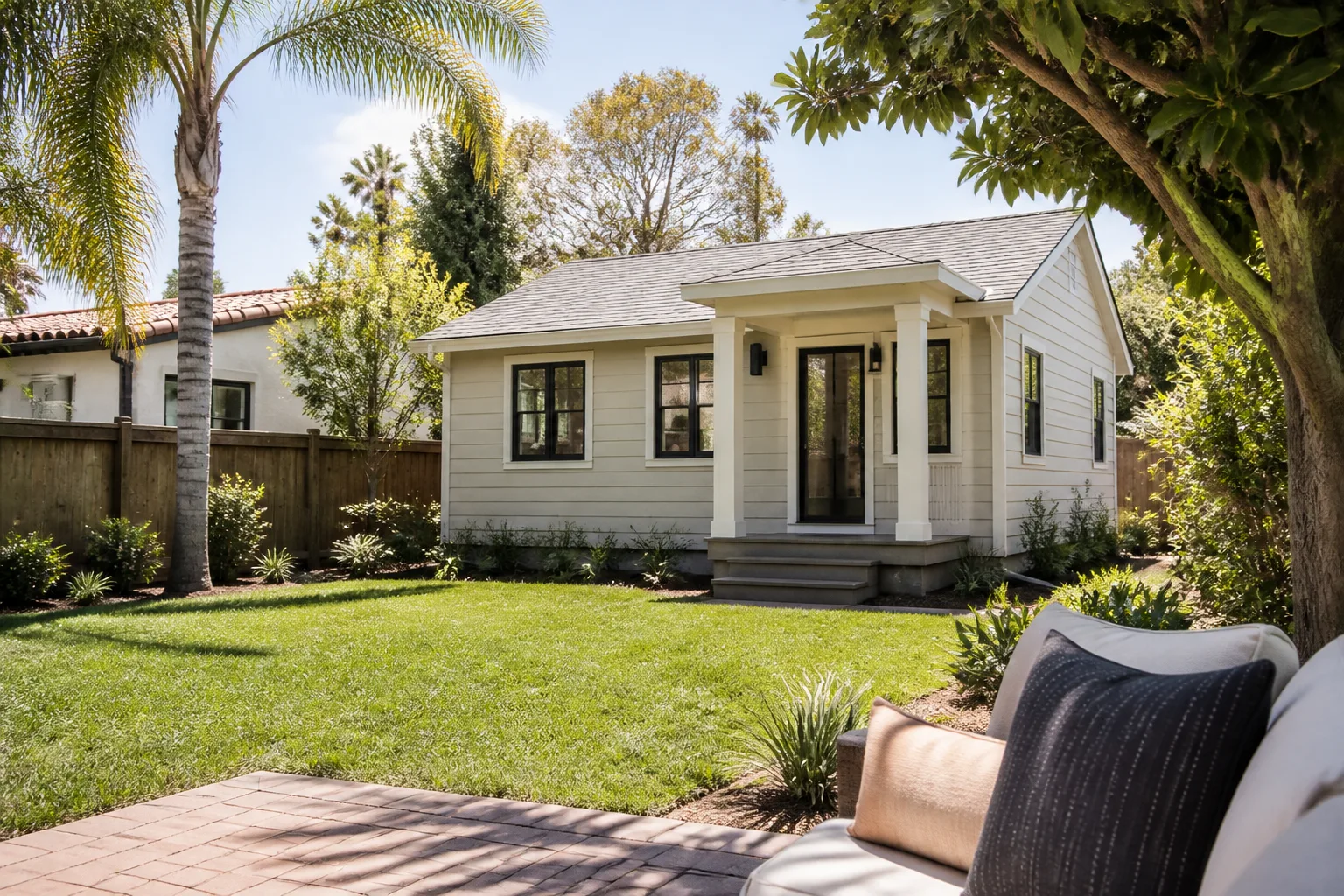
An accessory dwelling unit is a smaller structure than a full addition, but it carries more code decisions, not fewer. Irving regulates ADUs through zoning, lot size, setbacks, height, parking, and utility connections. The rules change by zoning district and lot, so no bid on an ADU is meaningful until a builder has confirmed what’s allowed on your specific parcel. An ADU bid that says “approximately 800 square feet, back corner of yard” without a zoning check is a guess dressed up as a proposal.
The traps we see most often:
- Setback assumptions. A detached ADU has to clear side and rear setbacks that vary by lot and district. Proposed position on the site plan has to match what zoning allows, not what looks nice in the sketch.
- Utility taps. Water, sewer, gas and electrical connections to a detached ADU are often the largest unexpected line item. Ask for the projected tap costs in writing before signing.
- Driveway and parking rules. If the ADU requires a parking pad, that scope should be in the bid. If it triggers landscape or drainage requirements, that scope belongs in the bid too. Driveways and pavers are a separate trade, and work through our Driveway & Pavers in Irving pages often overlaps with an ADU build, which is why getting the scope in one document matters.
- Fencing and privacy. An ADU usually needs its own yard separation or at least a durable fence line. If you’re building a fence to define the ADU yard, that line item belongs in the same written scope, not a verbal promise to “handle it later.”
- Fire separation and egress. A detached ADU is one code chapter; an attached ADU is another. Make the builder tell you which one your project falls under before bid day.
When we scope ADUs in Irving, the first two weeks are almost always code research and site plan review. That work costs money and it’s why honest ADU bids don’t come in at the price of a shed. A contractor who quotes an ADU off the top of his head with no zoning check is not saving you money. He’s skipping the part of the job where the answer lives.
The Paper Trail Red Flags: A Checklist to Run Before You Sign
Print this and take it to every contractor meeting. Personality is not on the list on purpose. What’s on the list is what a problem looks like six months after a handshake.
- No permit number. The contractor can’t produce a number, an address, and a name on the application. Hard stop.
- No change-order clause. The contract is silent on how scope changes get priced and approved.
- No written allowances. Finish budgets live in conversation, not on paper.
- “We handle everything” for subcontractors. No names, no insurance certificates, no workers’ comp answers.
- No lien waivers at draws. The builder has never heard of them or treats them as an insult.
- Payment schedule front-loaded. Large deposits before work, or big payments before inspections pass.
- No written warranty. No document that says what happens if something fails after handover.
- Price changes with no paper. Verbal add-ons, “we’ll just do that while we’re in there,” and invoices that grow.
- Permit skipped to “save time.” Any version of this sentence, ever.
If a builder passes most of these and stumbles on one, ask for the document. A confident builder will send it. If he pushes back, you have your answer. The paper trail is the whole job. Ask anyone on your street who’s had an addition done, or look up a builder’s license number yourself before signing anything. That habit costs nothing and saves more than any discount.
Common Mistakes to Avoid
- Picking the contractor you like best. Warm and charming is not the same as documented and accountable. The builder who brings three-ring binders to the first meeting is often the one you want.
- Treating the permit as paperwork. An addition on an unpermitted foundation is a resale problem, an insurance problem, and a safety problem. No amount of contractor confidence makes an unpermitted addition a good deal.
- Believing an ADU bid without a zoning check. Irving lot and district rules change the plan. A bid without a zoning confirmation is a placeholder, not a proposal.
- Signing a contract without reading the change-order section. If you can’t find one, ask them to add it in writing. If they won’t, walk away.
- Paying the first draw before lien waivers arrive. Collect waivers at every draw, in writing. This one habit alone prevents the worst addition stories in Texas.
- Using a verbal for anything on a structural addition. “We’ll figure out the windows later” or “we’ll see what the framing wants” is not scope. Scope is on paper or it doesn’t exist.
- Skipping the walkthrough before the final payment. Walk the finished square footage, run every fixture, check every door swing, and look at the inspection records before the final check goes out.
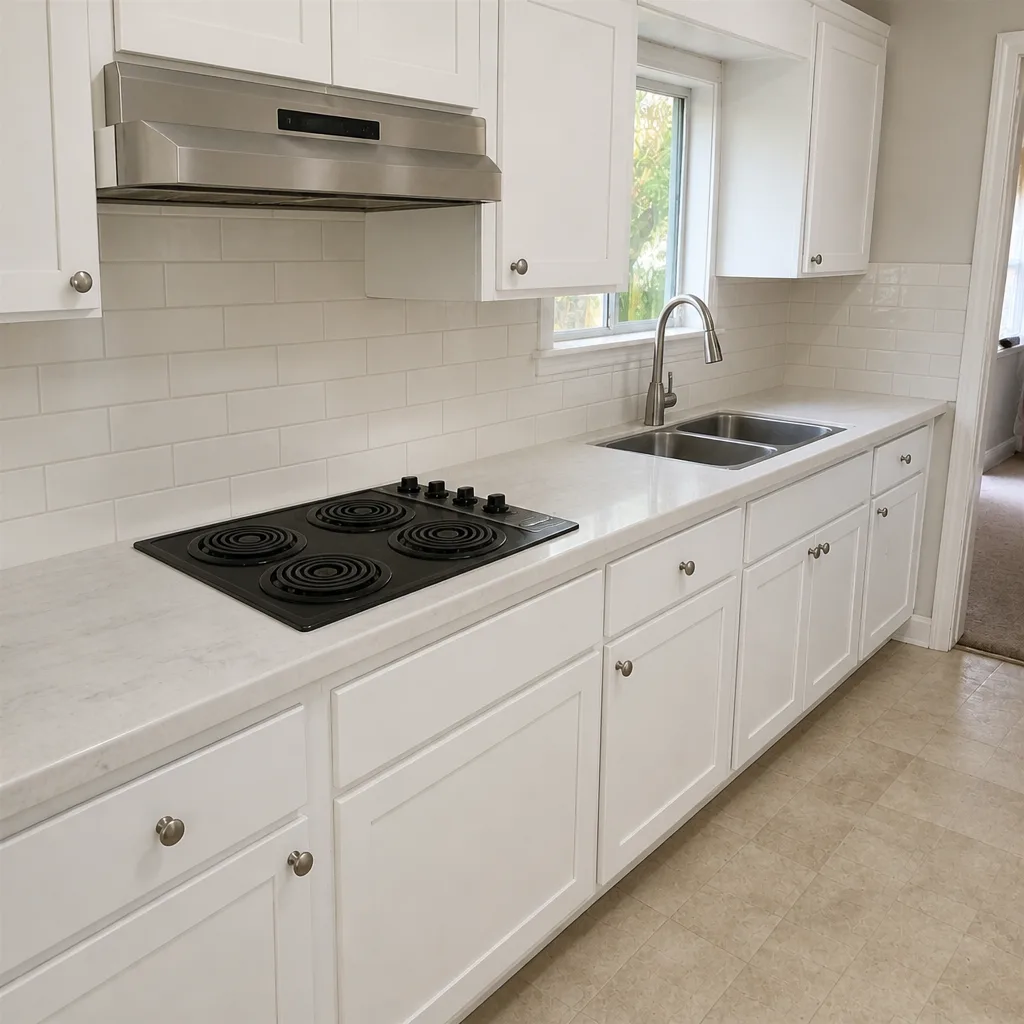
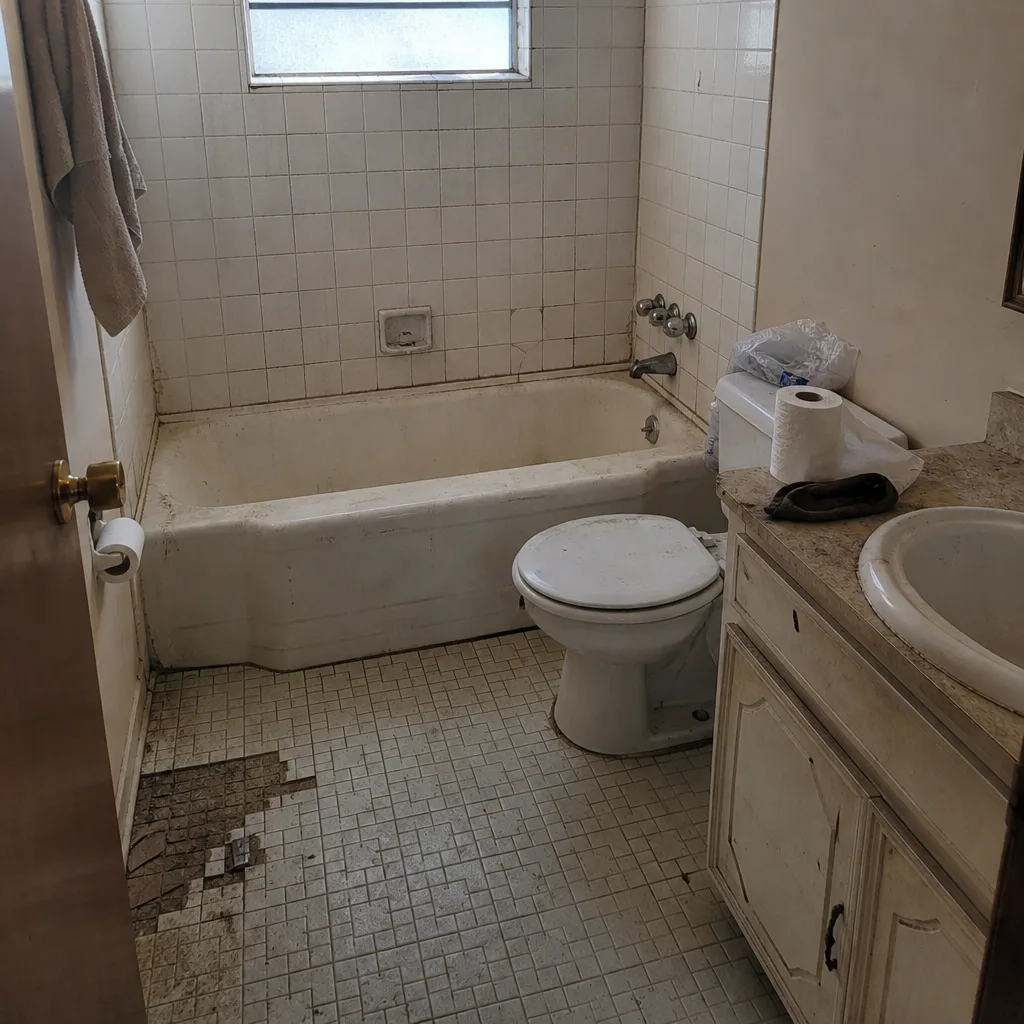
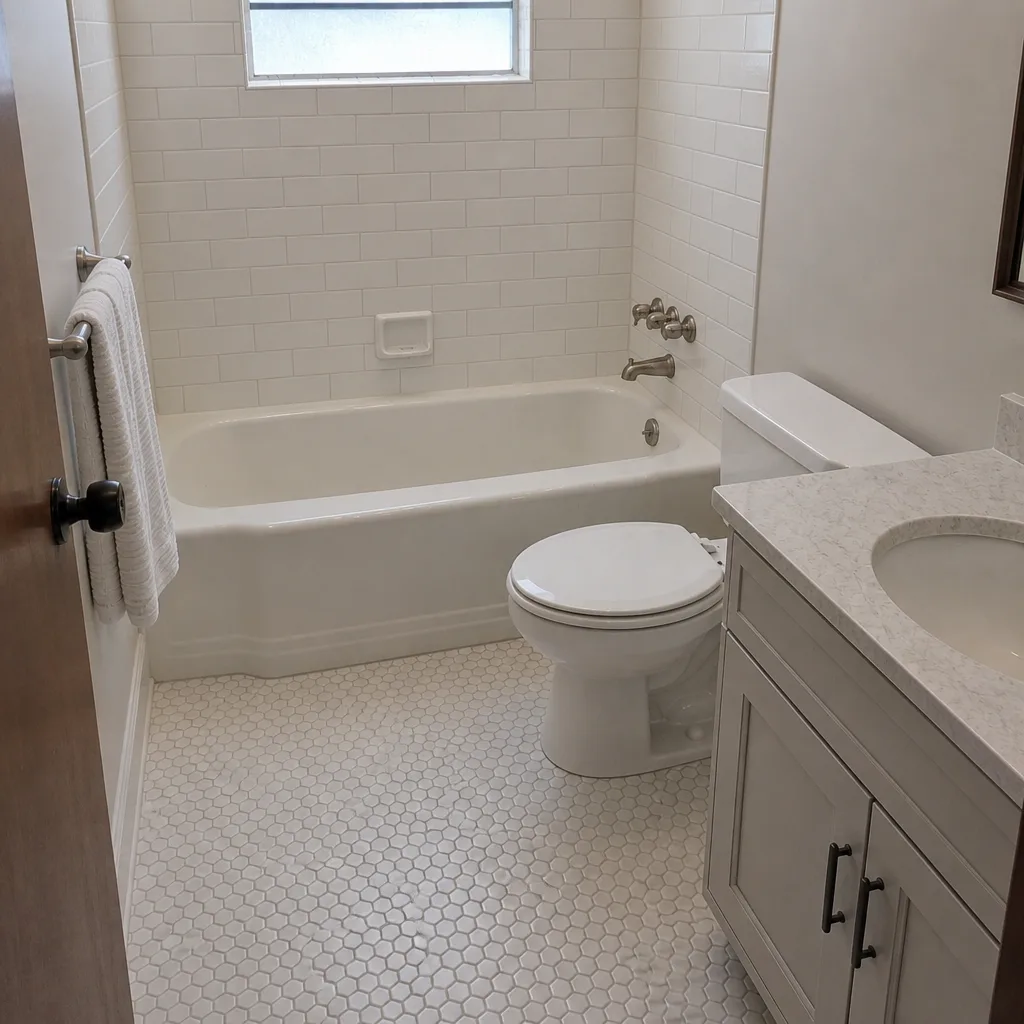
See the difference
 Before
 After
 Before
 After
 Before
 After
When to Call a Professional
An addition or ADU touches electrical, plumbing, structural, roofing, windows, exterior doors, and finish work across a lot with a permit and an inspection record. These are not the trades to dial in from a YouTube video while an inspector waits in the driveway. If your plans touch the foundation, if you’re adding square footage to the house, if you’re converting a garage or building out a backyard unit, or if a previous contractor’s work has to come out before yours can start, that’s the moment to bring in a builder who pulls permits and answers the phone. Roofing, exterior doors on a new addition, and window openings tie to brands like GAF, Therma-Tru, and ViewLux, and getting those details wrong is expensive to redo. Barrett & Sons Construction Irving offers free estimates in Irving. Call (833) 991-4970 for a written, line-item estimate and a copy of the permit process before anything is signed.
Frequently Asked Questions
Get the permit number and the address it’s filed under, then verify it on the city’s online permit portal. The number should match your address, the scope of work, and the contractor of record. If a builder can’t produce that number within 48 hours of breaking ground, treat it as a red flag. Call (833) 991-4970 for an estimate and we’ll walk you through the permit process before the job starts.
A contract without a written change-order clause is the single biggest paper trail problem, because it leaves every price change up to memory. The clause should say who signs, what gets priced, and how the price gets set before the work starts. On any project we take, every scope change and allowance adjustment arrives as a written change order before work happens. Call (833) 991-4970 for a free estimate.
Ask for the name of every subcontractor and a certificate of insurance for each one, with your address named as certificate holder, then collect a signed lien waiver before every draw payment. In Texas, an unpaid sub or supplier can file a mechanic’s lien against your home even if you paid the general contractor. Collect waivers at every draw, not at project completion. Call (833) 991-4970 for a free estimate.
A suspiciously low bid on structural work usually means the estimate leaves out engineering, proper foundation depth for Irving’s clay soils, permitted framing inspections, or real material costs. The project will cost what it actually costs later, through change orders or through rebuilding failed work. We’ve seen Irving homeowners spend nearly double the low bid by the time the addition was finished properly. Call (833) 991-4970 to compare a written, line-item estimate side by side.
Yes. An ADU requires zoning review, permits, and the same building, electrical, plumbing, and mechanical inspections as a home addition, plus utility tap approvals. Setbacks, lot coverage, and parking rules vary by zoning district, so no ADU bid is meaningful until a builder has checked the zoning for your specific parcel. Call (833) 991-4970 for a free estimate that includes a code review of your lot.
A typical home addition or ADU in Irving runs several months from permit approval to final inspection, with foundation, framing, rough-in, drywall, finish, and final walkthrough as the major stages. The permit stage alone usually takes weeks. Compressing the timeline by skipping permits or inspections is what turns a project into a mess. Call (833) 991-4970 for an estimate with a realistic schedule written into the scope.
The Bottom Line
The contractor who does the most damage on an addition project is rarely the one who looks sketchy. He’s the one who charms, promises, and never produces a document that would hold up in court. Your protection isn’t a personality test. It’s a paper trail: a pulled permit with a number you can verify, a contract with a written change-order clause, named subs with certificates of insurance, inspection records on the city’s portal, and lien waivers at every draw. If your builder produces all of that quickly and without attitude, you’re dealing with someone who can stand behind the work. If he resists, you’ve learned more from one conversation than from a week of Google reviews. That’s most of the decision, made before sign day.
Barrett & Sons Construction Irving writes every scope, every allowance, and every change order before work happens. It’s the only way to build an addition and still shake hands at the hardware store after the final walkthrough. If you’d like to see what the paper trail looks like on your project, or compare a written line-item estimate against a bid that didn’t quite add up, start at our Barrett & Sons Construction Irving home page or explore our Fence Installation in Irving work if the ADU yard already needs a boundary. Call (833) 991-4970 for a free estimate.
Written by the team at Barrett & Sons Construction Irving.