Last updated November 18, 2026



Free written scope consultation - allowances, timeline, and change-order rules on paper before a single trade is scheduled
Driveway & Pavers Troubleshooting: Common Problems and How to Fix Them
A single rocking paver in an otherwise solid driveway is never just one bad paver. It’s a drainage or base failure that’s already spreading to the pavers around it, quietly, under the surface where you can’t see it yet. Most homeowners in Irving call us about the one loose stone near the garage apron. By the time we lift the surrounding field, three or four more are already moving. This guide teaches you to read your driveway the way a contractor does: to tell a base failure from a sand failure, to understand what the white powdery film on your pavers is telling you about water, and to document a bad install so the person who laid it has to answer for it. Before you dig anything up, learn what the pattern is saying.
Quick Answer
Sinking, rocking, and heaving pavers are almost always caused by water getting where it shouldn’t – through a failed base, a clogged joint, or a drainage grade that pushes runoff under the edge instead of away from it. A few loose pavers over a sound base can often be lifted and reset; a whole section dropping in one corner signals base failure that needs excavation. Diagnose the pattern before you pull a single stone.
Styles & brands we work with
- Kitchen remodeling
- Bathroom remodeling
- Home additions & ADU
- Roofing
- Windows & doors
- Driveway & pavers
- Fence
Table of Contents
- Base failure vs. sand-bed failure: telling them apart by pattern
- What efflorescence and joint staining really tell you
- The drainage mistakes that kill paver edges in Irving’s clay soil
- Why a rocking paver spreads (and how fast)
- A homeowner self-assessment you can do this weekend
- When a repair is really a warranty claim
- How Irving’s weather and soil shape paver problems
- Repair or replace: the honest decision
Base Failure vs. Sand-Bed Failure: Telling Them Apart by Pattern
The most useful diagnostic skill you can learn is separating a base failure from a sand-bed failure, because they look similar at the surface but demand very different fixes. The base is the compacted gravel layer under everything; the sand bed is the thin leveling layer the pavers sit on. When the base is sound but the sand has migrated, you’re looking at a repair that’s measured in hours. When the base has failed, you’re looking at excavation, new aggregate, and re-compaction – a real job.
Here’s the pattern that separates them. A sand-bed failure tends to show up as isolated loose pavers scattered across a field, each one wobbly but sitting at the right height, with joints nearby that have lost their sand. The pavers around them are still tight. A base failure shows up as pavers that have dropped as a group – a whole corner or a straight-run section sinking together, often with a visible dip you can feel underfoot or catch with a straightedge. The pavers move as a unit because the ground beneath them gave way. If you can stand back and draw a line around the sunken area and that line encloses more than a handful of stones, you’re looking at the base.
We’ve learned to watch for one more tell. A base failure often shows a hairline crack running through the joints, following a seam where the failed section meets the sound one. That crack is the settlement line – the point where the good ground ends and the bad ground begins. In Irving neighborhoods with a mix of original clay subgrade and fill dirt from older construction, that line can be surprisingly sharp. When you see it, the sunken pavers aren’t the problem; they’re the symptom.
What Efflorescence and Joint Staining Really Tell You
That chalky white film on your concrete pavers is efflorescence, and it’s a mineral deposit left behind when water moves through the paver, dissolves salts inside it, and evaporates at the surface, leaving the salts behind. Every paver will show a little of it now and then. The question isn’t whether you have it – it’s where the water is coming from to carry those salts out.
Read efflorescence this way:
- A light film that brushes off and returns after rain – normal moisture cycling. Cosmetic. Sweep it, don’t panic.
- Heavy, crusty deposits concentrated along one edge or in a low spot – water is pooling or wicking there. This points to a grade problem or a broken base that’s holding water under the pavers.
- Dark joint staining that won’t scrub out, often near the driveway apron or a slope – organic growth or mineral staining from moisture that stays in the joints. If the sand in those joints washes out with every storm, the water is moving through the bed, not off the surface.
- Efflorescence that appears on interior-grade pavers under a covered porch – that’s moisture coming up from below, and it’s telling you the base isn’t draining.
None of these means your driveway is ruined. They’re clues. Combined with where the pavers are settling, they’ll point you toward the source. In our experience around Irving, a paver edge that stays damp and chalky long after the rest of the driveway has dried is usually sitting at the low point of a grade that was never set right to begin with.
The Drainage Mistakes That Kill Paver Edges in Irving’s Clay Soil
Irving sits on expansive clay soil, and that single fact explains most of the paver failures we see. Clay swells when it’s wet and shrinks when it dries, moving under a driveway the way a boat moves on a slow tide. That movement is patient and relentless, and any weak point in the drainage design gives it an opening.
Here are the specific mistakes, in order of how often we find them:
- No edge restraint, or a restraint sitting on soft soil. A paver edge that isn’t locked by a properly set edge restraint will creep and drop, especially where the driveway meets grass or a flower bed. Once the edge drops, water sheets under the pavers and the whole failed sequence starts.
- A grade that slopes toward the garage or the house. Even a slight fall the wrong way funnels runoff into the apron, where it sits against the base and softens it. In Irving, one heavy spring storm can expose a grade mistake that’s been there for years.
- Downspouts dumping directly onto the driveway edge. A gutter that empties onto the pavers sends a concentrated stream into exactly the place where the base is thinnest.
- Missing or failed joint sand before winter. Open joints let water fall straight through the bed instead of shedding off the surface.
- Cutting pavers too tight against a wall or foundation. No gap for movement, and the pavers crack or lift as the clay moves in the wet-dry cycle.
When someone lays pavers in Irving without addressing drainage, the driveway doesn’t fail because the pavers were bad. It fails because the water was never given anywhere to go. If you’re thinking about a rebuild, have the drainage plan reviewed before you pick a paver color – it’s the part that decides whether the job lasts. Our Driveway & Pavers in Irving page covers how a proper base and grade are built from the subgrade up.
Why a Rocking Paver Spreads (and How Fast)
Here’s what almost no homeowner is told: a rocking paver doesn’t stay a rocking paver. It moves a little with every step and every vehicle pass, and every one of those movements scuffs the sand and gravel beneath it until a pocket forms. That pocket holds water. The water softens the bed, the neighbors start to move as their bedding drains into the growing void, and within a season or two you’ve got a spreading area, not a single stone.
What accelerates it:
- Turning wheels in the same spot – a drive that ends near the garage door sends a turning force into the pavers every trip.
- Heavy vehicles on a driveway built for cars – a box truck, a contractor’s trailer, or a moving van can press a slightly weak section into failure in a single afternoon.
- Water following the void – once the pocket opens, runoff finds it, and wet clay under a paver is a paver that moves.
- Delayed repair – reseting one paver is a small job; resetting twelve after the spread is not.
When we look at a rocking paver in Irving, the first question isn’t “how do we fix this stone” but “what made it rock.” Pull up the loose one, check the bed under it, and check whether the ones beside it are still tight. That tells you whether you’re catching a problem early or looking at a scattered base failure in progress. If you’re within a couple of seasons of a new install and it’s happening, call the installer – more on that below.
A Homeowner Self-Assessment You Can Do This Weekend
You don’t need to be a contractor to gather good information. Before you call anyone, do this assessment. It takes an hour, it’s safe, and it can save you from a vague phone description and a guess-based quote.
- Walk the driveway barefoot or in thin shoes in the morning while the surface is cool. Your feet will find rocking pavers faster than your eyes. Mark each one with a piece of chalk.
- Lay a straightedge or a long board across the suspected sunken area. Photograph it from the side. The gap between board and paver shows the depth of settlement in a way a photo alone can’t.
- Probe the joints with a screwdriver. If it pushes into sand and then can’t go further, the bed is intact and it’s likely a sand-migration issue. If it sinks easily into a void or hits nothing solid, you’ve found base loss.
- Hose a small area and watch where the water goes. Does it sheet off the surface and away from the house, or does it disappear into a joint and stay? Write it down.
- Photograph the efflorescence and staining. Take a wide shot and a close shot of each affected area.
- Note the weather history. Did the problem appear after a heavy rain, after a vehicle came through, or after a hard freeze? The timing tells you which mechanism is at work.
- Check the edges and restraint. Look where the driveway meets grass, the apron, or a wall. If an edge is dropping or the restraint is exposed, note where and how long the stretch is.
- Measure the sunken area. Length and width, in feet. A number gives any contractor a real starting point, and it gives you a way to compare bids.
Bring that information to the estimate. A contractor who’s looking at real, documented evidence will quote more accurately than one working from a description, and you’ll be able to tell whether the person on your driveway is diagnosing or guessing. It’s the difference between a written scope and a shrug.
When a Repair Is Really a Warranty Claim
If your driveway is a few years old and it’s already failing in a way that looks like base failure, you may not have a repair on your hands – you may have a warranty claim. Most quality installers offer a workmanship warranty alongside the paver manufacturer’s product warranty, and a spread of settling pavers from an improper base is exactly the kind of thing workmanship coverage is for. The problem is that most homeowners can’t prove it, so the installer calls it normal and walks away.
Document it so they can’t:
- Get the original paperwork. The written scope, the base depth specified, the compaction method, the edge restraint type. If the contract says “4 inches of compacted base” and the base is 2 inches of loose gravel, you have a case in writing.
- Photograph the failure over time. Date-stamped photos taken two weeks apart show spreading, which is the signature of a base failure rather than a single damaged paver.
- Keep a written log of every conversation. Who you spoke to, when, what they said. Send follow-ups by email or text so there’s a record.
- Don’t let anyone “fix” it before it’s documented. A quick reset of the visible pavers can erase the evidence of the underlying problem. Photograph everything first.
- Ask in writing whether the failure is being treated as a workmanship issue. A straight yes or no in writing forces the conversation.
This is why we put scope, allowances, and change orders in writing on every job and stand behind the work with a written promise. If a job isn’t right, the paperwork should make it plain who fixes it. A company that won’t give you that in writing is telling you something.
How Irving’s Weather and Soil Shape Paver Problems
We work in Irving every week, and the specific conditions here change what fails and when. The clay soil is the headline. It swells after a soaking rain and shrinks in a dry spell, and a driveway built without accounting for that movement will find a weak spot and work it open. The spring storms that drop two inches in an afternoon are the test that exposes a bad grade; a driveway with a flat or reversed slope near the garage will show it within a season.
The summer heat matters too. Pavers expand in the sun, and if the joints were filled too tightly against a wall or the edge restraint was set without a gap, that expansion has nowhere to go. We’ve pulled up pavers in August that were pushed up against a foundation and found them cracked or heaved at the joint line. Winter cold snaps are shorter here than up north, but a hard freeze on wet joints can still pop a paver that was already loose, and the freeze-thaw cycle will finish off a sand bed that was already draining badly.
What this means practically: in Irving, the driveway edge, the apron at the garage, and any low spot in the field are the three places to inspect first after a big rain. That’s where the clay and the water do their work. If you’re planning new hardscape or replacing a failing driveway, the base and drainage design should reflect this soil, not a generic spec from a catalog. The same attention to local grade and drainage applies to Fence Installation in Irving and any other exterior work, which is why we treat the ground as the first thing to get right.
Repair or Replace: The Honest Decision
The question homeowners ask us most is whether to fix or replace, and the honest answer depends on how much of the driveway has failed and how the failure is distributed. A few isolated loose pavers over a sound base? Reset them, refill the joints, and check the drainage. A corner or a run that’s dropped as a group? Excavate that section, rebuild the base, and reset – a repair, but a real one. A driveway with settlement in three or four separate zones, cracked pavers along a seam, and persistent efflorescence in the low spots? The base has failed in multiple places, and piecemeal repairs will keep you busy for years.
Here’s a rough decision framework:
- Under 10% of the field affected, pavers intact: repair and reset. This is the best-case scenario and the fix is straightforward.
- 10-25% affected, mostly one area: excavate and rebuild that section, reset the pavers, re-sand the joints.
- Over 25% affected in multiple areas, or a failed grade throughout: a full rebuild with a properly compacted base, correct edge restraint, and a drainage plan.
- Pavers themselves cracked or spalling across much of the drive: the material has failed too, and a rebuild lets you choose a new paver line, including options like Belgard and Techo-Bloc that hold up well in this climate.
We won’t tell you to replace a driveway that just needs a section rebuilt, and we won’t tell you a patch will hold when the base is gone across the whole field. If you’re weighing a larger project that involves grading and drainage around the house – a garage conversion, an addition, a new paved approach – our Home Additions & ADU in Irving page covers how site work and drainage get planned when they’re part of a bigger build.
Common Mistakes to Avoid
- Fixing the symptom without finding the cause. Resetting a rocking paver over a failed base just buries the problem for a season. Find the source of the movement first, or it comes right back.
- Topping off joints with sand and calling it fixed. New sand over open joints hides the problem and lets water keep running through the bed. The joint sand is a clue, not a cure.
- Ignoring a grade that slopes toward the house. In Irving’s clay, a slight fall toward the garage or foundation is the setup for a failed apron and a wet base. It needs to be corrected, not tolerated.
- Skipping the edge restraint. Loose edges creep and drop, and once they do the water gets in. This is one of the cheapest parts of the job to get right and one of the most expensive to skip.
- Driving a loaded truck over a driveway built for passenger cars. A delivery truck or a contractor’s trailer can crush a weak section in an afternoon. Ask for deliveries to be staged in the street if you can.
- Letting a contractor start before the scope is in writing. A verbal “we’ll fix the base” is not a scope. Get the base depth, the compaction method, and the repair area written down before anyone lifts a paver.
- Throwing away the original contract and photos. If the install was flawed, those are your warranty evidence. Keep them.
See the difference
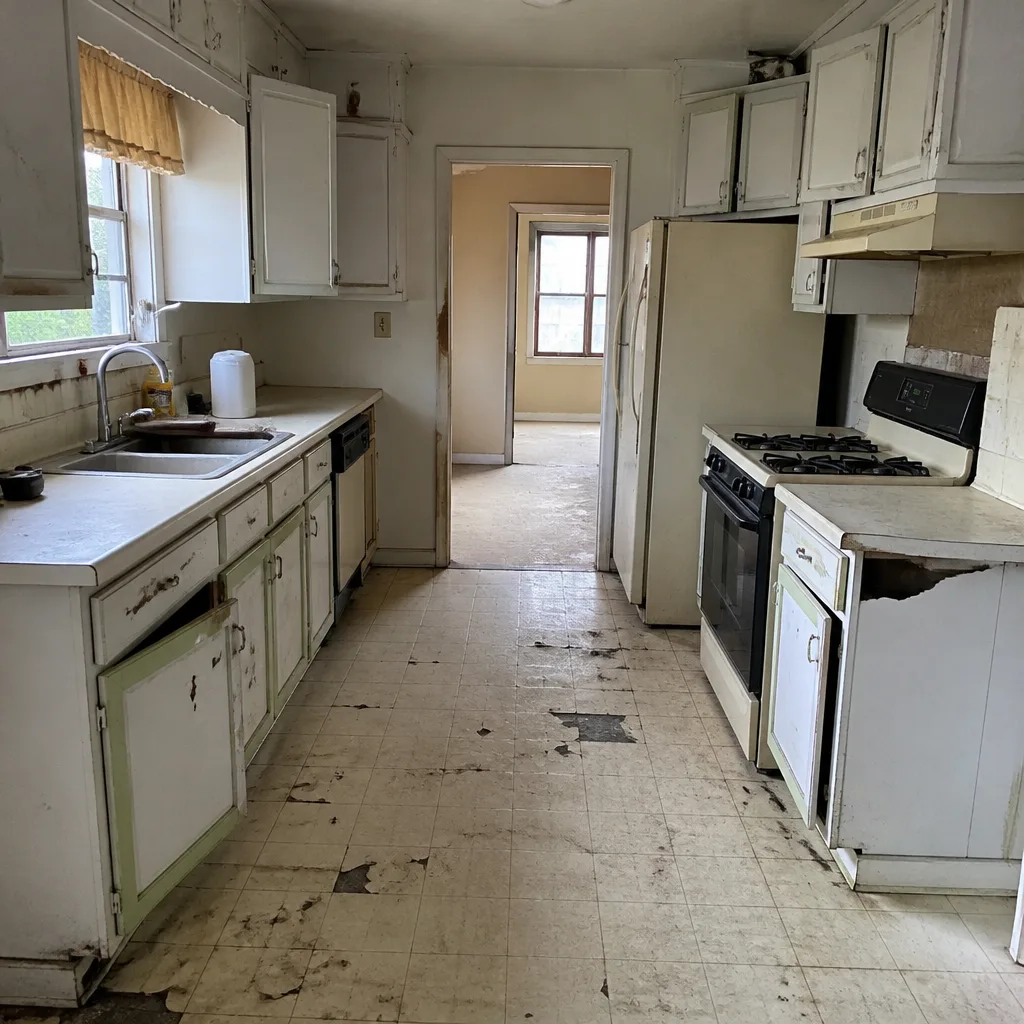 Before
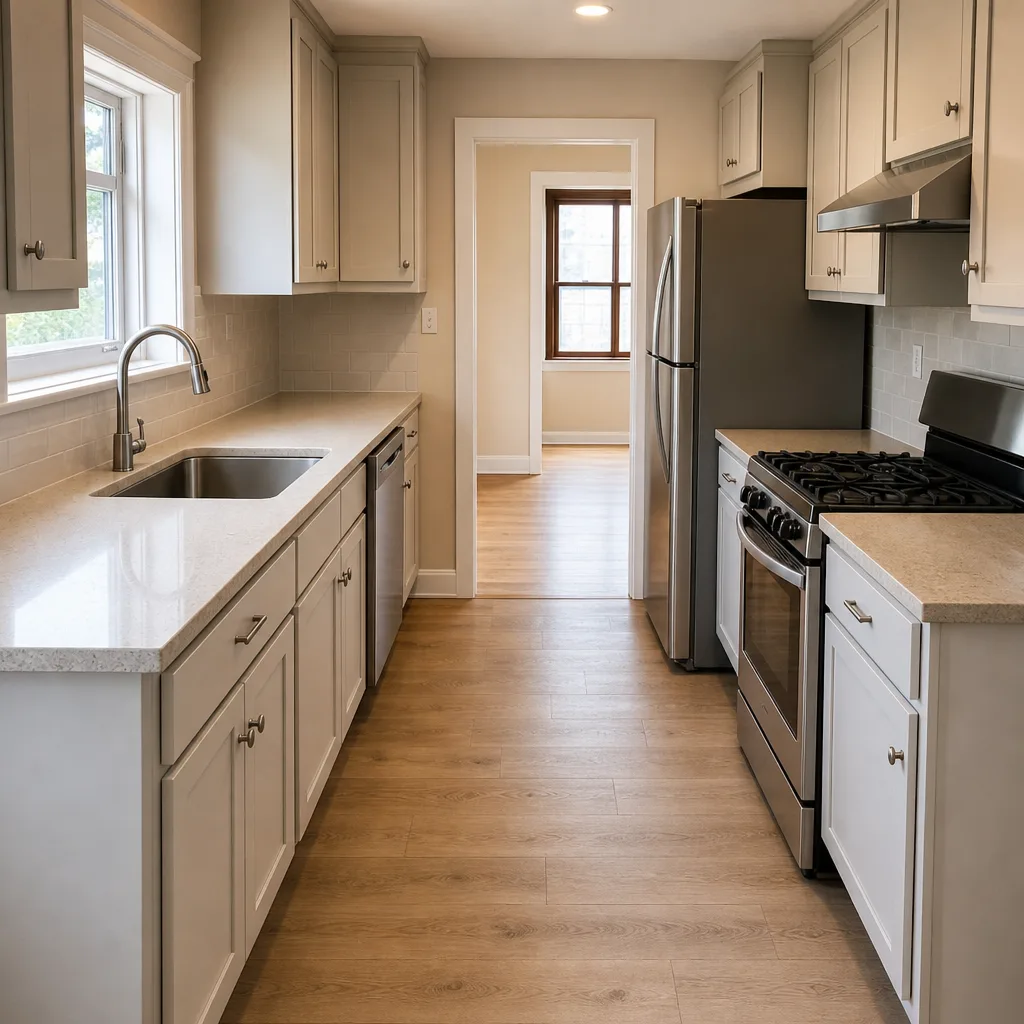 After
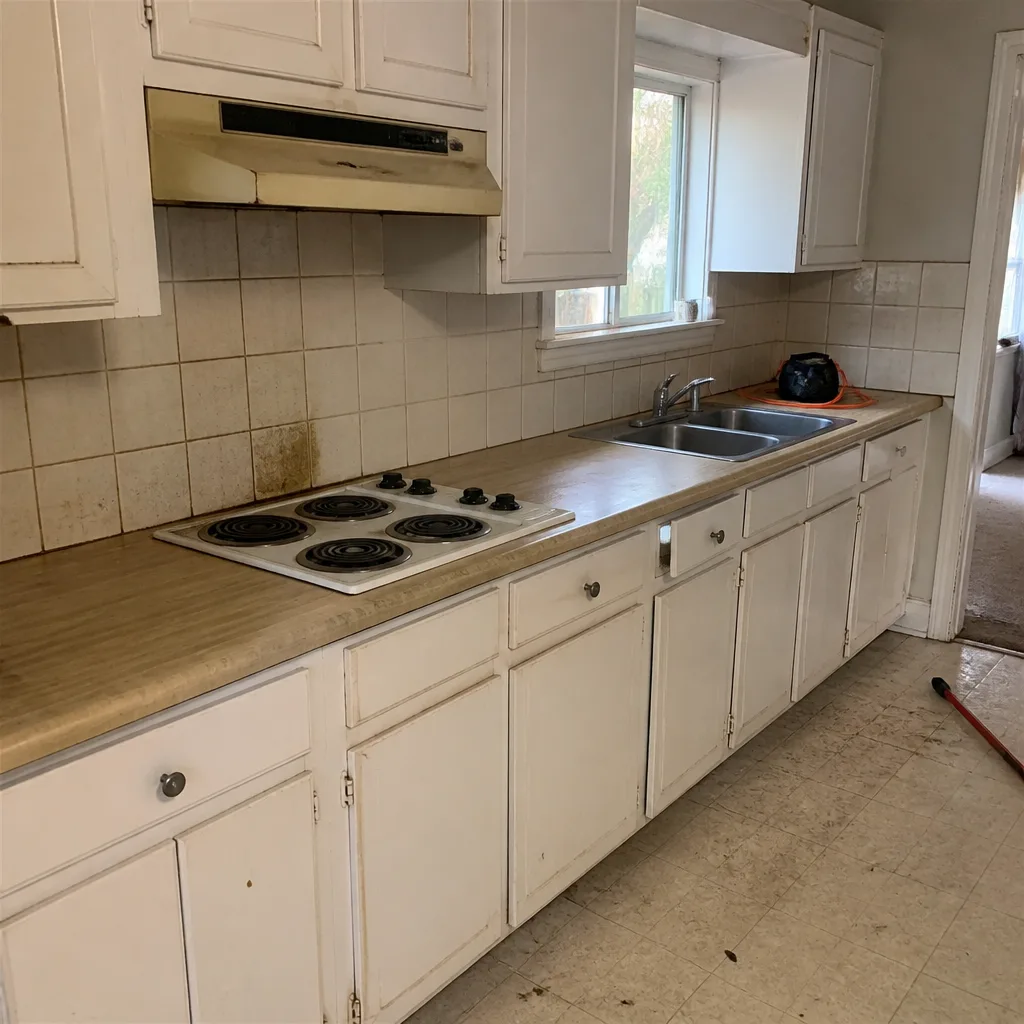 Before
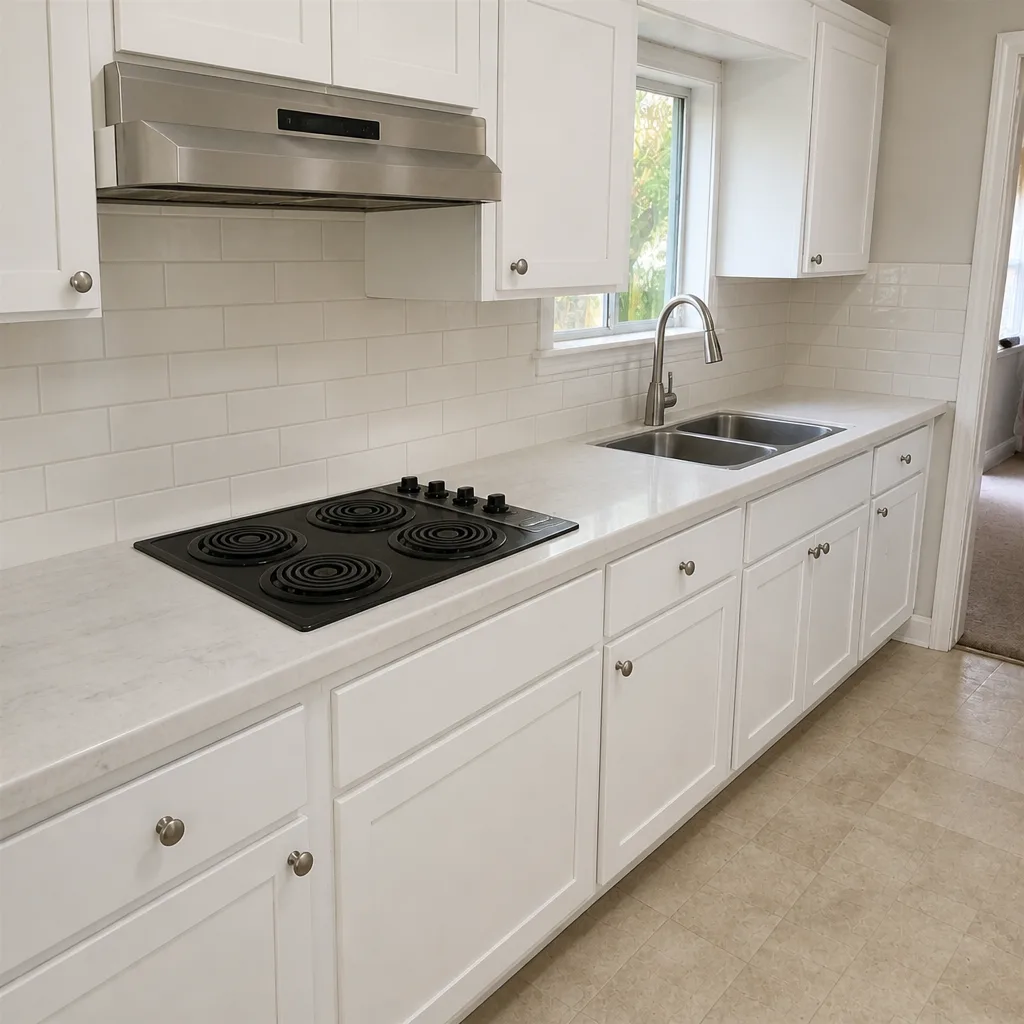 After
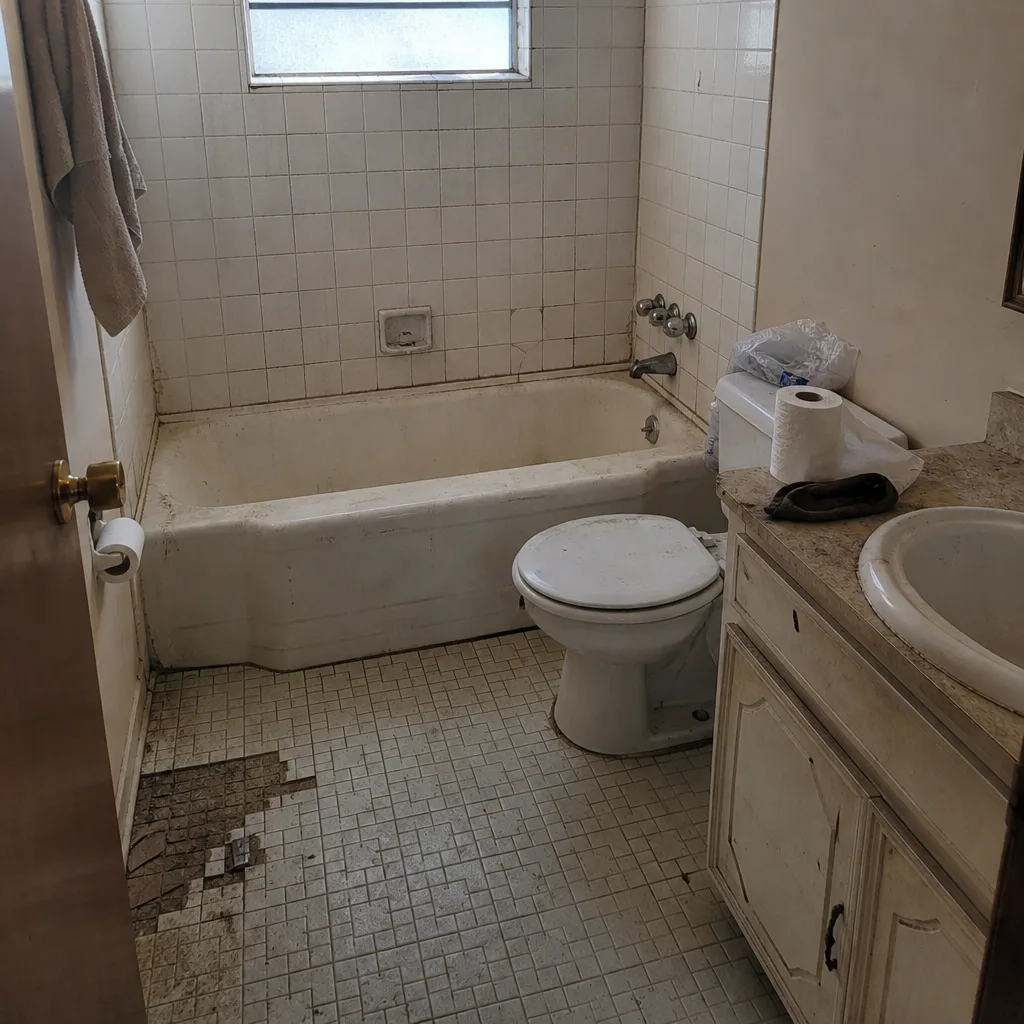 Before
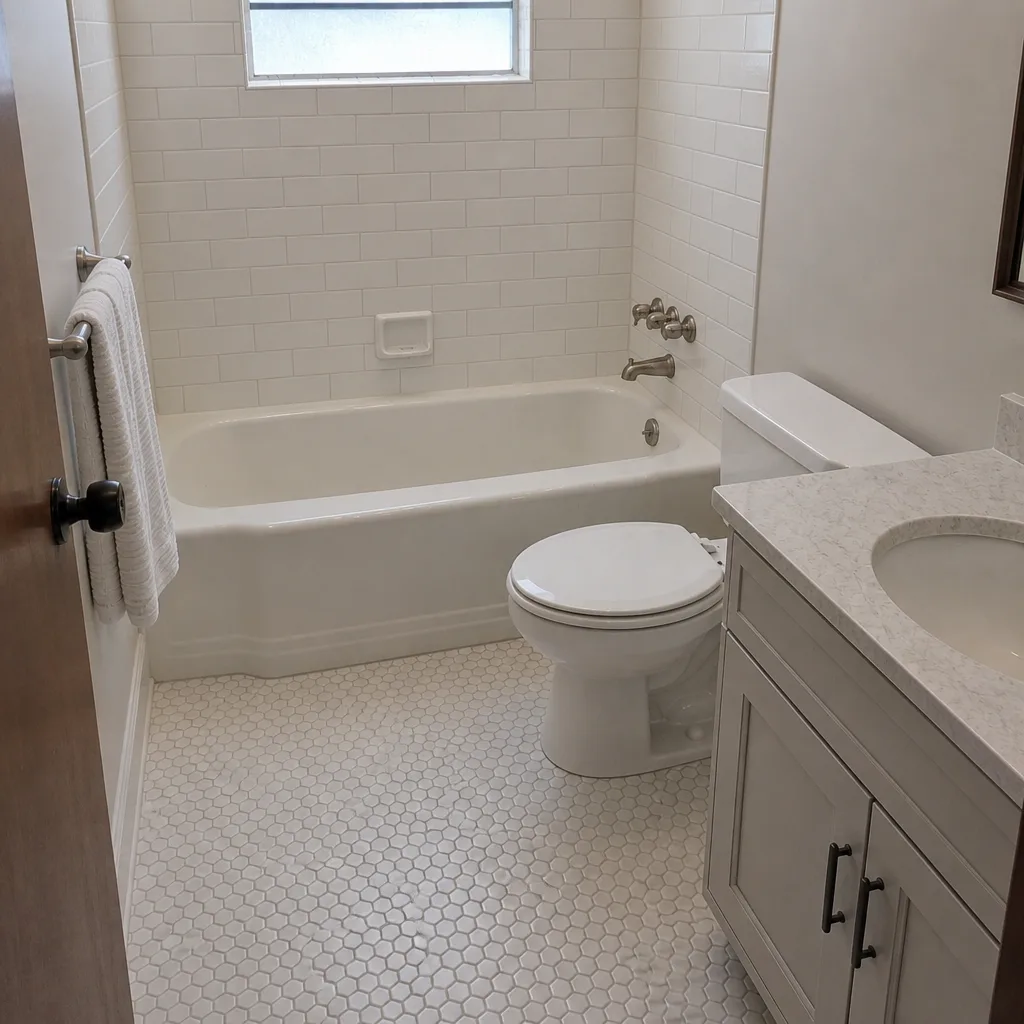 After
When to Call a Professional
Call a professional when the sunken area is larger than a few pavers, when the failure has spread past one section, or when water is pooling against the house, garage, or foundation – that last case can put the structure at risk. Call too when you suspect a workmanship problem and the installer won’t return your calls, or when you’ve documented the failure and want an independent assessment before you spend money. We offer free estimates in Irving, and we’ll tell you honestly whether it’s a reset, a section rebuild, or a full replacement. Call (833) 991-4970 to schedule yours, or to get a free second opinion on any written estimate you’ve already received. There’s no trip charge inside the county.
Frequently Asked Questions
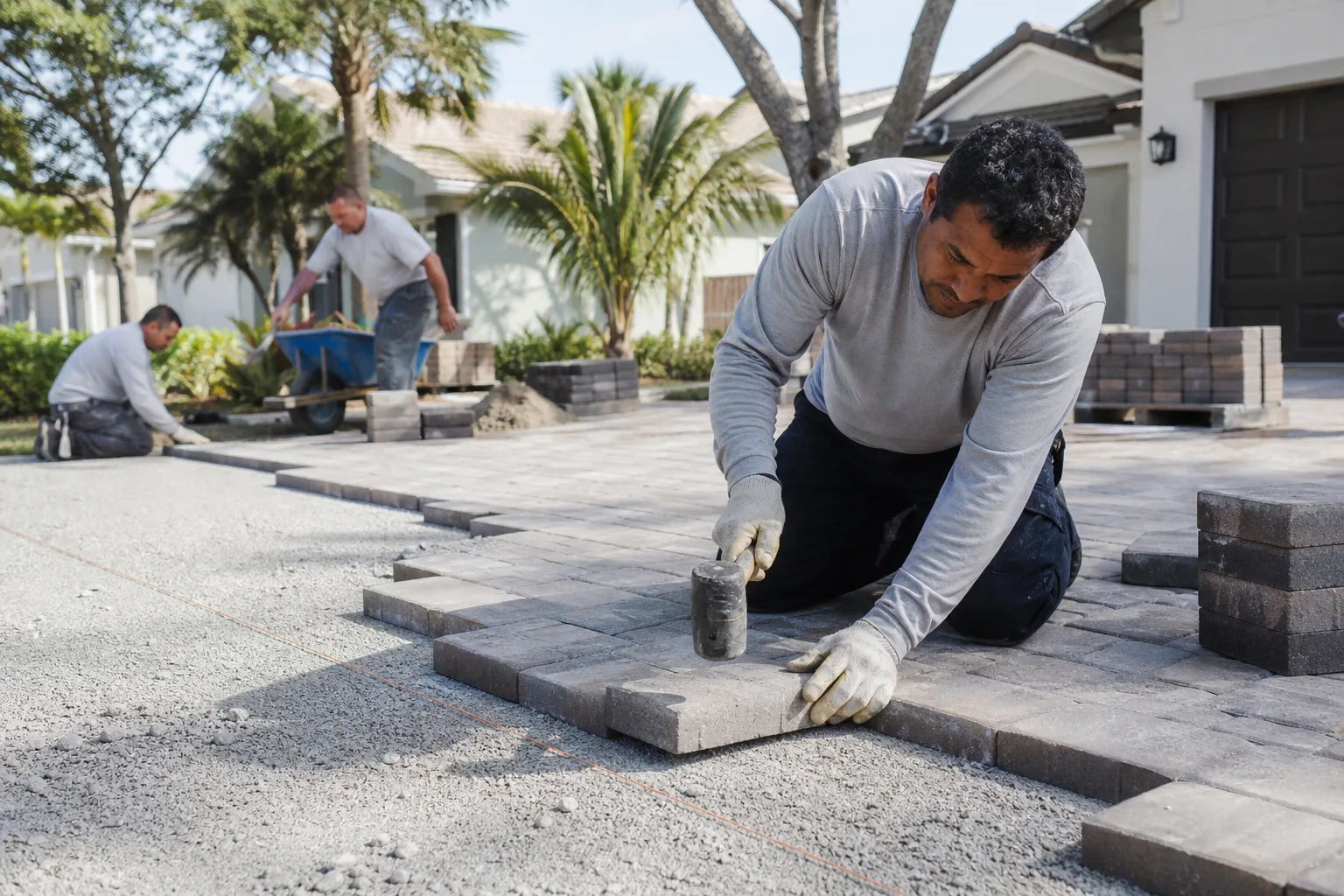
A rocking paver means the bed beneath it has failed or washed out, and the movement will spread to the surrounding pavers over time because each wobble scuffs away more of the bed. The fix isn’t to reset that stone alone – it’s to pull it, check the bed, and find where the water is coming from. In our experience, one rocking paver in Irving is usually the first sign of a drainage issue at the nearest edge. Call (833) 991-4970 for a free estimate that finds the cause, not just the symptom.
Resetting a handful of pavers and re-sanding the joints is a modest repair; a section rebuild with a new base runs considerably more because it involves excavation, new aggregate, compaction, and resetting the full section. A full driveway replacement is a larger project still. The exact number depends on the area affected and the base work needed, which is why we quote from the driveway, not from a description. Call (833) 991-4970 for a written line-item estimate – it’s free, and the price doesn’t change once the work starts without a written change order.
That’s efflorescence, a mineral deposit left when water moves through the paver and evaporates at the surface. A light film is normal and cosmetic. Heavy deposits concentrated in one area or along an edge mean water is pooling or wicking there, which points to a grade or base problem worth checking. Call (833) 991-4970 if it’s persistent and you want an expert to read what it’s telling you.
You can reset a single loose paver over a sound bed by lifting it, leveling the sand, and setting it back with fresh joint sand, and many homeowners do. But it’s not worth attempting when the whole section has dropped, when the base is soft, or when the pavers lock together as a field. Those are signs of base failure that need excavation and compaction done right. For anything past a few loose stones, get an assessment first – it’s free, and it saves you from doing the same job twice.
Dropping edges almost always come from a failed or missing edge restraint combined with Irving’s expansive clay soil, which moves with wet and dry cycles and pushes water under the loose edge. Once the edge drops, runoff sheets under the pavers and the failure spreads inward. The fix is to reset or replace the restraint and correct the grade, not to pile more sand on the joint. Call (833) 991-4970 to have yours looked at.
You document the failure and put the claim in writing: the original contract and base spec, dated photos showing the settlement spreading, a written log of every conversation, and a written question asking whether the failure is being treated as a workmanship issue. A company that won’t answer in writing is telling you something. If you need an independent read before you push, call (833) 991-4970 for a free second opinion on any written estimate or warranty response you’ve received.
The Bottom Line
A paver problem is a message about water and ground. Read the pattern – scattered wobbling pavers over a sound bed, or a section that dropped as a group – and you’ll know whether you’re looking at a reset or a rebuild. Efflorescence and joint staining tell you where moisture is moving; a reverse grade and a loose edge tell you why. In Irving, the clay soil and the spring storms make drainage the deciding factor, which is why a driveway that lasts is built from the base up, not from the pavers down. Document what you find, get the scope in writing, and fix the cause, not the symptom. If you want a contractor who puts the scope, the allowances, and any change order on paper before work begins, that’s how we work on every job.
Let’s Take a Look at Your Driveway

If your driveway has a sunken section, a rocking paver, or staining that’s been bothering you for a season, don’t guess at it. Call Barrett & Sons Construction Irving at (833) 991-4970 for a free estimate. We’ll look at the pattern, check the base and the grade, and tell you straight whether it’s a repair or a rebuild, with the scope written out before anything moves. Every eligible job includes permits pulled and inspections signed, every price change arrives as a written change order before work proceeds, and every completed job is backed by our written 90-Day Done Right Promise. Have a written estimate from another contractor? We’ll give you a free second opinion. Prefer to start with the full picture? Visit our Barrett & Sons Construction Irving home page and see how we work.
Written by the team at Barrett & Sons Construction Irving.